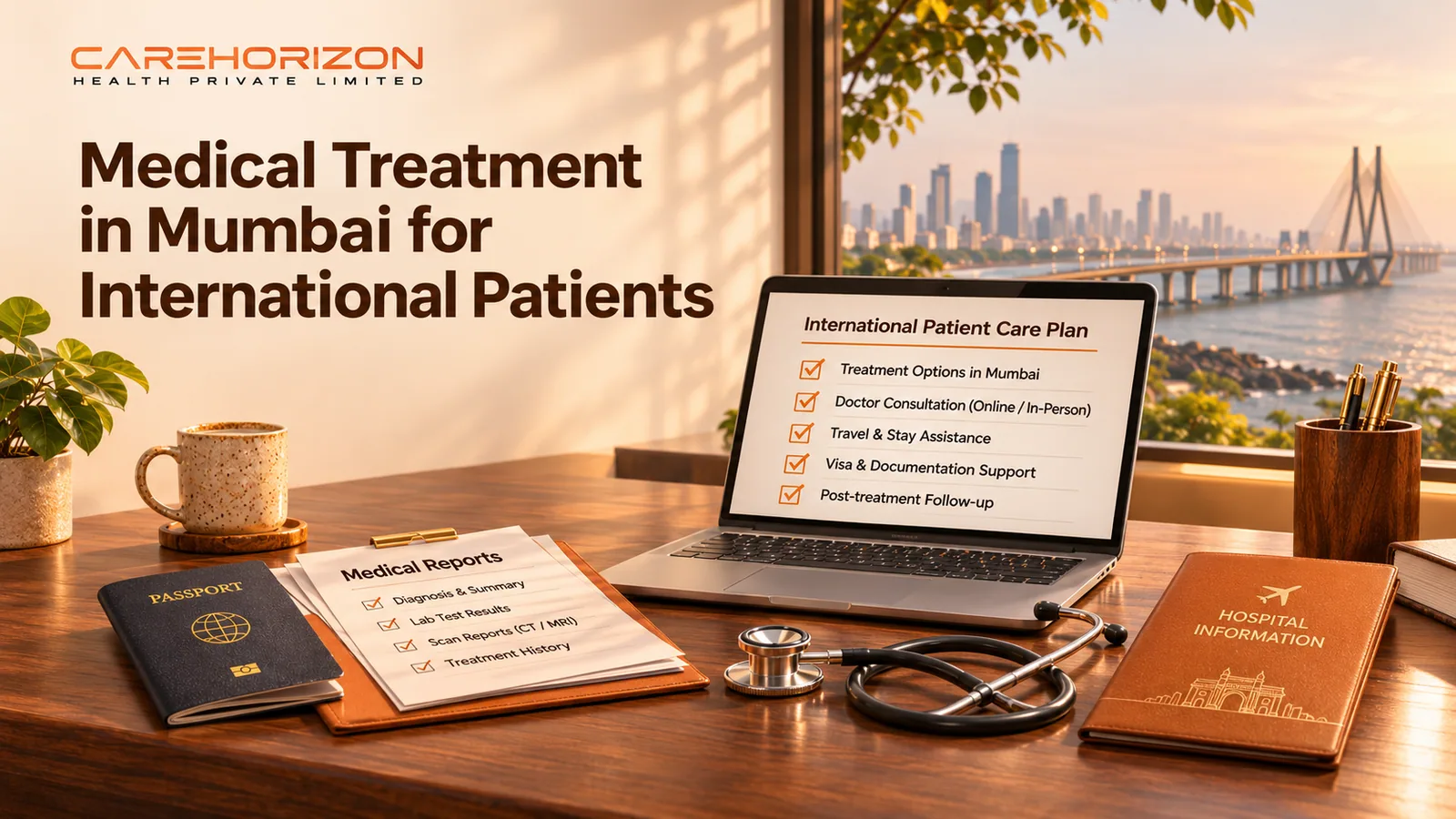
This article provides general information to support better planning. Individual medical decisions and fitness for travel require assessment by qualified treating professionals.
Mumbai is one of the Indian cities that international patients may consider for specialist consultations, planned surgery or further investigation of a complex diagnosis. But choosing Mumbai is only the beginning. Families need to identify a suitable hospital and clinician, understand what can be assessed before arrival, check immigration requirements and build a realistic plan for local travel, accommodation and recovery.
The term medical tourism Mumbai can make the process sound like an ordinary trip with a hospital appointment added to the itinerary. In reality, clinical decisions may evolve after examination, treatment costs can change and a patient may not be ready to return home on an originally booked date. A responsible plan treats the healthcare journey and its practical arrangements as connected but distinct.
This guide explains what foreign patients should check when considering medical treatment in Mumbai, from selecting an institution and preparing medical records to arrival logistics, visa documentation, hospital estimates and discharge follow-up. It does not rank individual hospitals or promise the availability of a named specialist. For a broader overview, see Carehorizon's international patient information.
Why Consider Mumbai for Medical Treatment?
Mumbai is a major Indian metropolitan area with multiple healthcare institutions and specialist departments. For some international patients, a particular clinician, hospital or service in the Mumbai region may be relevant to their treatment enquiry.
That does not mean every medical service is available at every institution or that Mumbai is universally preferable to another Indian city or the patient's home country. The decision should begin with an individual medical assessment and verifiable provider information.
Start by Defining the Medical Question
Before selecting a city or buying a flight, ask a qualified clinician to clarify the diagnosis, the urgency of care and the purpose of a specialist consultation. Does the patient need a second opinion, a defined procedure, additional investigations or a multidisciplinary assessment?
A clearly framed clinical question helps hospitals identify the relevant department. An initial recommendation based on records sent from abroad may be conditional on examination after arrival.
Choosing a Mumbai Hospital: Evaluate the Exact Campus
Mumbai hospitals may operate several branches, departments or specialist units, and their capabilities can vary by site. Confirm the exact legal name, address, treating department and whether relevant diagnostics, anaesthesia and critical-care services are available at the proposed facility.
Use the hospital's official website and independently verified contact details rather than relying only on a brochure or a third-party message. The same hospital-group brand should not be taken as proof that every campus offers the same services.
Confirm the Specialist and Current Affiliation
Request the doctor's full name, specialty, professional registration information where applicable and present hospital affiliation. Ask whether the clinician has reviewed the actual records and will personally assess the patient.
The National Medical Commission's public register and relevant State Medical Council can support registration checks. A doctor's registration is not a guarantee of the outcome or proof of specific procedural experience, so discuss relevant case expertise with the institution.
NABH, JCI and Other Credentials
NABH and JCI operate distinct accreditation programmes. Search current records through the issuing body's own directory and verify that the status refers to the exact Mumbai facility being evaluated.
Accreditation can provide information about an organisation's assessed systems, but it does not certify every individual procedure or promise a complication-free result. Also distinguish hospital accreditation from a facilitator's empanelment or another organisation's certificate.
Hospitals for Foreign Patients: What the International Desk May Do
A hospital's international patient desk may receive records, organise appointments, explain admission documentation, provide estimates and liaise with the hospital's billing team. Its precise responsibilities depend on the institution.
Ask who handles clinical questions and who handles logistics. The desk cannot independently guarantee that a surgeon will recommend a procedure, that an insurer will pay or that immigration authorities will approve entry.
Avoid Choosing by Advertising Alone
A medical tourism website may describe a hospital as the best, most advanced or cheapest without showing a transparent method of comparison. Such language is not a substitute for hospital-specific evidence.
Ask for the actual clinician, relevant facility, proposed clinical pathway and price assumptions. Patient reviews can offer context but may be incomplete, old or difficult to verify.
Requesting a Preliminary Specialist Opinion
Many planned treatment journeys begin with the submission of a clinical summary, investigations and previous treatment notes. The receiving specialist may provide an initial view on what further assessment is required.
The hospital should explain whether this review is a formal clinical consultation, an administrative screening or a provisional response. The doctor may need to examine the patient in person before confirming treatment.
For related practical guidance, see the guide to sending medical records to Indian hospitals.
Getting a Second Opinion Before Travelling
A second opinion may be appropriate when a diagnosis is uncertain, proposed surgery is major or the patient wants to understand alternatives. The reviewing specialist should receive complete and accurate records.
A second opinion does not always require immediate travel, but availability and clinical suitability of remote review vary. Patients should not delay emergency care while waiting for another country's appointment.
For related practical guidance, see the guide to obtaining a second opinion.
Medical Records to Send to Mumbai
A useful record package includes the current diagnosis, medical history, medication and allergy lists, relevant laboratory reports, imaging and pathology where applicable, and prior discharge summaries.
Ask the receiving department whether original scan files, pathology slides or translations are required. Keep dated copies and use approved secure methods for sharing sensitive information.
For related practical guidance, see the medical records organisation guide.
When Multiple Specialists Are Needed
Some patients need coordinated opinions from different specialties rather than a single surgeon's review. Ask which consultant will lead the case, whether the specialists will discuss the findings together and who will explain the combined plan.
Additional consultations should answer specific clinical questions. A medical travel coordinator can help with appointment administration but does not decide the necessary clinical team.
Treatment Areas and Clinical Scope
An international patient's enquiry might involve cardiac care, cancer treatment, neurosciences, orthopaedics or kidney-related care, among other specialties. Each area has its own diagnostic and treatment considerations.
Listing possible specialties does not mean Carehorizon provides those procedures or that a particular Mumbai hospital offers them. Qualified clinicians and the verified institution determine actual clinical options.
For related practical guidance, see the treatment areas overview.
How to Read a Mumbai Hospital Treatment Estimate
Request a dated written estimate for the proposed treatment, including room category, investigations, professional fees, operating costs, medicines, devices and important exclusions. Ask whether the quote is conditional on assessment after arrival.
An estimate is not necessarily a fixed final bill. New tests, complications, a different procedure or an extended stay may change charges. Compare hospital quotes only when they refer to sufficiently similar clinical services.
For related practical guidance, see the hospital treatment estimate guide.
What Costs Exist Beyond the Hospital Bill?
Families should budget separately for flights, visa expenses, accommodation, meals, airport transfers, local transport, accompanying relatives, payment fees and any additional days in Mumbai after discharge.
The total cost depends heavily on trip duration, patient mobility and the location of the chosen hospital. A national average is not a reliable substitute for current quotations and an individual itinerary.
Accommodation: Stay Near the Actual Hospital
Mumbai is geographically extensive, and the practical distance between a hospital and accommodation should be assessed by route and journey conditions, not only by a map's straight-line distance.
Compare accessibility, lift availability, suitable bathrooms, cancellation terms, meal options and the support required after discharge. A nearby and clinically suitable option may reduce tiring transfers for patients attending repeated appointments.
For related practical guidance, see the guide to staying near the hospital.
Understanding Mumbai Travel and Road Transfers
Allow for the time needed to travel between the airport, accommodation and the exact hospital campus. Road journey times depend on origin, destination, traffic and conditions; avoid assuming a universal transfer duration.
A medically stable patient may use ordinary transport. Patients requiring oxygen, monitoring, a stretcher or substantial clinical assistance should have transport needs assessed by qualified professionals.
Arriving Through Mumbai's International Airport
Mumbai's Chhatrapati Shivaji Maharaj International Airport is a major entry point for overseas travellers. Confirm the operating airline, terminal and actual arrival details, particularly when flight changes or connections are involved.
Arrange a verified pickup contact and confirm the destination address. Do not assume airport assistance includes clinical supervision or that a routine vehicle is suitable for a medically unstable passenger.
For related practical guidance, see the guide to arriving in India for treatment.
How to Organise Airport Assistance
Some passengers need a wheelchair, guidance through long terminals or support with boarding. The airline's rules and operating arrangements determine which services can be confirmed.
A companion may help with personal needs, while a professional escort may be appropriate when there are medical requirements. The treating clinician should assess the necessary level rather than an agent applying an age-based rule.
Medical Escort Versus Family Attendant
A relative may provide practical help, communication and reassurance. A medically qualified escort has a different role and may be indicated for some patients only after clinical assessment.
Do not assume a family attendant can administer treatment or that a professional escort automatically makes commercial air travel suitable. The airline and the responsible clinician must confirm the travel arrangement.
For related practical guidance, see the medical escort and air ambulance comparison.
Is the Patient Fit to Fly to Mumbai?
A hospital appointment does not establish fitness for a flight. Recent surgery, unstable symptoms, breathing needs, limited mobility or other medical conditions can require case-specific assessment and airline clearance.
If the patient needs urgent treatment or is unstable, seek appropriate local medical care rather than book ordinary commercial travel without medical evaluation.
For related practical guidance, see the fitness-to-fly guide.
Passport Requirements Before Departure
Check the passport's validity, condition and applicable entry requirements using official Indian government information and the operating airline's document checks. Requirements can depend on nationality and immigration category.
Do not assume every traveller has identical document rules. Keep the passport details consistent with hospital correspondence, visa applications and air tickets.
Medical Visa and Entry Permission
The Government of India's official e-Visa system provides an e-Medical pathway for eligible nationalities and specifies a hospital letter containing the patient's information and an intended admission or treatment date.
The applicable visa route depends on the individual passport and purpose. Hospital correspondence cannot guarantee visa approval, and an ordinary tourism entry category should not be assumed appropriate for planned medical treatment.
For related practical guidance, see the medical visa planning page.
Medical Attendant Visa Planning
An accompanying relative may need a distinct visa category or other appropriate entry permission. The official portal describes e-Medical Attendant arrangements for eligible applications, subject to prevailing rules.
Check the current conditions for every traveller separately, including passport information and permitted duration. Do not assume an attendant's permission is automatically covered by the patient's approval.
Arrival Registration and Immigration Updates
Beyond the visa, India may require an online arrival information submission under current immigration rules. The official visa portal publishes notices about e-Arrival cards and other arrival formalities.
Verify the requirements shortly before departure rather than using an old checklist. An arrival form does not replace the necessary visa or entry permission.
Do Not Use Unverified Visa Websites
Imitation websites can copy official colours and language while charging unauthorised fees or collecting documents. Begin at the official indianvisaonline.gov.in domain and follow government instructions.
Never share banking passwords or one-time codes with someone claiming to speed up immigration processing. A travel facilitator can organise documentation within its scope but does not decide an application.
Preauthorisation and International Insurance
An international policy may cover certain overseas medical services but still exclude planned treatment, require network eligibility or demand advance approval. Ordinary travel insurance often addresses unexpected illness rather than elective travel for treatment.
Ask the insurer and the Mumbai hospital insurance desk whether cashless direct billing is available or whether the patient must first pay and then claim reimbursement.
For related practical guidance, see the international patient payments guide.
Confirming Payment Instructions
Before transferring a deposit, independently verify the hospital's billing entity, beneficiary, invoice and authorised payment channel. Sudden changes to bank details or requests to pay an unrelated individual should be investigated.
Keep receipts and distinguish hospital bills from airfare, accommodation and any coordination fees. A deposit does not automatically guarantee admission or that a procedure will remain clinically indicated.
Why Currency Conversion Matters
International patients may hold funds in another currency while hospitals bill in Indian rupees. Exchange spreads, card fees or bank transfer charges can change the foreign-currency cost.
Use a budget that records the invoice currency, expected payment method and actual charges. Do not treat an internet reference rate as a guaranteed bank settlement rate.
How Treatment May Change After Arrival
The Mumbai specialist may request updated imaging, blood tests, pathology review or additional clinical assessment. A different diagnosis, newly recognised risk or altered treatment recommendation can change the timeline and estimate.
Ask the clinician to explain why the plan changed, what alternatives exist and whether further consent is required. Administrative scheduling should follow the medical plan, not control it.
What Happens During Hospital Admission?
The hospital determines registration requirements, consent documentation, deposits, clinical assessments and ward or ICU arrangements appropriate to the case. Ask for a named clinical and administrative contact.
An international patient desk can assist with paperwork and communication. Only qualified professionals determine treatment, monitoring and discharge readiness.
If Recovery Takes Longer Than Expected
Postoperative recovery varies. Some patients need further monitoring, rehabilitation or wound review after leaving hospital but before they can undertake a long international flight.
Keep accommodation and return flights flexible where possible. A planned departure date must not force premature clinical discharge or travel against medical advice.
For related practical guidance, see the after-discharge recovery guide.
Discharge Summary and Medical Records
Before leaving Mumbai, obtain a formal discharge summary, relevant operative or procedure notes, investigation results, current medications, warning signs and written follow-up recommendations.
These records should be available to the patient's clinician at home. A translated or shortened administrative summary may not be sufficient for complex continuing care.
Continuing Care After Returning Home
Identify an appropriate doctor near home who can review the treatment record, order necessary tests and assess complications. Remote consultation with the Mumbai specialist may supplement care if available and permitted.
It does not replace every physical examination or urgent local assessment. The CDC advises patients receiving treatment abroad to plan follow-up before travel and tell later clinicians about overseas procedures.
For related practical guidance, see the guide to continuing care with a doctor at home.
Comparing Mumbai With Another Indian City
Some patients also consider Delhi, Chennai or another Indian location. Instead of relying on claims that one city is universally best, compare the actual specialist, facility capability, treatment scope, cost, travel route and follow-up arrangements.
A city nearer to the patient's entry airport is not automatically more suitable. The clinical question and verified provider should remain the starting point.
For related practical guidance, see the questions to ask before choosing a hospital.
When Treatment Is Not Available at the First Hospital
A doctor may recommend another facility or specialist after reviewing the records. Ask for the clinical reason, whether the receiving institution can accept the patient and what transfer arrangements are required.
The transfer should be medically appropriate and supported by a proper handover. A coordinator cannot independently guarantee a hospital bed or authorise transfer for an unstable patient.
Questions to Ask a Mumbai Hospital Before Travelling
Which specialist has reviewed the records, and what is provisional? What is the exact campus? Which additional investigations may be needed? How are complications and multidisciplinary consultations managed?
What is included in the estimate, how are payments handled, what letter can the hospital provide for a visa application and what follow-up will be required before flying home?
A Practical Pre-Travel Checklist
Medical: diagnosis and question documented; specialist review requested; tests and current medications organised; travel suitability discussed with a qualified clinician.
Administrative: hospital campus and appointment confirmed; passport and visa checked; official hospital letter obtained if applicable; finances, accommodation, airport pickup and attendant needs clarified. Recovery: discharge and return travel plans remain flexible.
A Checklist for the First 48 Hours in Mumbai
Verify the hospital contact, consultation location and any preparation instructions. Ensure the clinical team receives accurate medical records and knows about current medications and allergies.
Record which questions remain open after the first appointment. If new testing is recommended, seek an explanation and revised estimate rather than relying on assumptions made before arrival.
An Example: Travelling for a Second Opinion
Imagine a patient whose existing specialist recommends further review before major surgery. The family sends records to a Mumbai hospital, verifies the clinician and books a consultation rather than an assumed operation.
After in-person review, the patient may decide to continue care locally or discuss treatment in Mumbai. The scenario is hypothetical and illustrates why travel should be based on an accurate clinical question.
An Example: Treatment Requires More Time
A patient receives a preliminary treatment estimate and plans a short visit. After examination, additional tests are required before the responsible doctor can recommend the next step.
The family asks for updated written information, adjusts accommodation and delays committing to a non-refundable return flight. This example is illustrative, not an estimate of typical hospital timelines.
An Example: Family Attendant and Mobility Needs
An older patient is medically suitable for travel but needs assistance navigating airports and reaching appointments. A family member helps with practical tasks, and the airline confirms wheelchair arrangements.
The hospital and clinicians determine any clinical support required during recovery. The example shows that ordinary mobility assistance and professional medical escort services have different purposes.
How Carehorizon Health Supports Planning
Carehorizon Health Private Limited coordinates practical arrangements around clinical care. Depending on the enquiry, this can include organising records, communicating hospital requirements and aligning travel, arrival and appointment logistics.
The treating doctors and hospital control medical recommendations and admission; immigration authorities decide visas; airlines determine travel acceptance and insurers decide coverage. Carehorizon does not guarantee provider relationships, treatment outcomes, admissions, prices or visas.
For related practical guidance, see the how Carehorizon works.
Frequently Asked Questions
Can international patients receive medical treatment in Mumbai?
Foreign nationals may seek care at an appropriate Mumbai healthcare institution, subject to clinical acceptance, lawful entry and the hospital's admission procedures.
How do I choose a hospital in Mumbai for treatment?
Identify the relevant specialty and named hospital campus, verify credentials, obtain a clinician's review and request a written estimate and follow-up plan.
Are all Mumbai hospitals accredited by NABH or JCI?
No. Credentials vary by institution and campus. Verify the exact facility and the claimed programme through the accrediting body's official directory.
Can I get a medical visa for treatment in Mumbai?
Eligible applicants may use applicable Indian medical visa pathways. Requirements depend on nationality and current official rules, including hospital documentation in relevant cases.
Do I need a letter from the Mumbai hospital for an e-Medical Visa?
The Indian e-Visa portal specifies a hospital letter with patient and intended treatment information for eligible e-Medical applications. Check the current official instructions.
Can a family member accompany me?
Often, but the attendant's entry permission, accommodation and hospital access need separate confirmation. Their role is different from that of a professional medical escort.
How much does treatment in Mumbai cost for foreign patients?
There is no reliable single figure. Ask the actual hospital for a case-specific quote and budget separately for travel, accommodation, meals, attendant needs and follow-up.
Will international insurance cover a Mumbai hospital?
It depends on the policy, treatment and provider network. Obtain written confirmation and clarify direct billing versus reimbursement.
Should I book a return ticket before surgery?
Consider flexible ticket terms, because discharge and fitness to fly depend on individual recovery and airline requirements.
Can Carehorizon choose a surgeon or guarantee my admission?
No. Carehorizon may coordinate practical enquiries within its scope, while hospitals and qualified clinicians independently determine treatment and admission.
Official References and Further Reading
- Government of India — Official e-Visa Portal and e-Medical Visa Requirements: https://indianvisaonline.gov.in/evisa/
- Government of India — Main Indian Visa and e-Arrival Information: https://indianvisaonline.gov.in/
- NABH — Find a Healthcare Organisation: https://nabh.co/find-a-healthcare-organisation/
- National Medical Commission — Doctor Registration Search: https://nmr.nmc.org.in/search-doctor
- CDC Yellow Book — Medical Tourism and Follow-Up Considerations: https://www.cdc.gov/yellow-book/hcp/health-care-abroad/medical-tourism.html
- Joint Commission International — Accredited International Organisations: https://www.jointcommission.org/en/about-us/recognizing-excellence/find-accredited-international-organizations
Contact Carehorizon Health: WhatsApp/Call +91 6292041222 | care@carehorizonhealth.com | https://carehorizonhealth.com/enquiry/
Medical, legal, financial and publication disclaimer: This article is general planning guidance, not individual medical advice, an endorsement of a Mumbai hospital or specialist, a claim of Carehorizon hospital partnerships, a treatment quotation, a visa eligibility determination, or a guarantee of clinical outcome, medical transport or insurance coverage. Specific hospital facilities, credentials, medical recommendations, prices and entry rules must be checked with responsible providers and authorities. Seek urgent local care for acute symptoms. Internal Carehorizon links are from the supplied site inventory and require live verification before publication.
Carehorizon Health coordinates medical travel, patient transfers and related arrangements. The information here is educational; it does not diagnose, prescribe, guarantee an outcome or replace advice from your treating medical team. Service availability, costs and travel requirements are confirmed case by case.