This article provides general information to support better planning. Individual medical decisions and fitness for travel require assessment by qualified treating professionals.
For patients in Uzbekistan considering treatment in India, the challenge is rarely limited to finding a hospital. Medical reports must be reviewed, the right specialist identified, an appointment confirmed and the appropriate Indian visa obtained. Families may also need to organise flights, accommodation, interpretation and local transport, particularly if the patient requires assistance during the journey.
India has hospitals offering consultations and treatment across a broad range of specialties. However, the most appropriate hospital depends on the patient's diagnosis, the services available at the specific institution and the treating team's clinical judgment—not on a city-wide ranking or a promise of better results. This guide explains how patients travelling from Tashkent, Samarkand, Bukhara and other parts of Uzbekistan can plan each stage of a medical journey to India.
Why Do Patients from Uzbekistan Consider Treatment in India?
An Uzbek patient may seek a specialist opinion abroad when a diagnosis is complex, a particular procedure is being considered, or the family wants to compare treatment options. Available services in India include specialties such as cardiology, oncology, orthopaedics, neurology, nephrology, gastroenterology and rehabilitation. That does not mean every hospital has the same expertise, capacity or programme.
When choosing whether to travel, the patient and their clinician should weigh the possible clinical benefit against the physical demands of travel, the treatment duration, costs and the availability of appropriate care in Uzbekistan. For an urgent or unstable condition, prompt local assessment is more important than following a planned international itinerary.
Step 1: Clarify the Medical Need Before Choosing a City
Ask the treating doctor in Uzbekistan to prepare a summary of the condition, the reason specialist care is being considered abroad and whether the patient is currently stable enough to travel. A patient seeking an outpatient second opinion and one needing inpatient surgery will have different logistical requirements.
Prepare a consolidated medical file with consultation notes, recent prescriptions, laboratory results, imaging and imaging reports, pathology or biopsy results when applicable, previous surgery and discharge documents, current medications, allergies and relevant chronic conditions. If the patient uses oxygen, dialysis, mobility aids or monitoring equipment, include those needs in the summary.
Ask the receiving hospital whether documents in Uzbek or Russian must be translated into English. Use accurate translations, not an informal summary of findings, when important clinical or consent decisions depend on a report.
Related reading: How to Get a Medical Second Opinion in India — /blog/how-to-get-a-medical-second-opinion-in-india
Step 2: Select a Suitable Indian Hospital and Specialist
Choosing a hospital should start with the clinical problem. Ask which department handles the specific diagnosis, who will review the submitted records and whether the relevant diagnostic or treatment facilities are available at that campus. Major hospitals operate across cities and branches, so the presence of a hospital name is not proof that a particular procedure is offered at every location.
Delhi-NCR, Mumbai, Chennai, Hyderabad, Bengaluru and Kolkata all have hospitals that may be suitable depending on the case. The preferred destination should emerge from the shortlist of specialists and hospitals rather than determine the shortlist.
Questions to ask the hospital
• Can the clinical team review the patient's records before travel?
• Which specialist or department would assess the condition?
• Is an appointment confirmed, and what tests may be required on arrival?
• Is surgery, admission or repeated outpatient treatment likely?
• Can the hospital issue an invitation or admission letter for an Indian e-Medical visa?
• Can it arrange qualified interpretation in Uzbek or Russian for important clinical discussions?
• What is the preliminary estimate, what is excluded and how long might the patient need to stay?
• What instructions apply after discharge and during travel home?
A remote medical opinion is preliminary. The treating doctor may change the recommended plan after examination or additional investigations in India. This uncertainty should be reflected in both the itinerary and budget.
Related reading: How to Choose a Hospital and Doctor in India — /blog/how-to-choose-a-hospital-and-doctor-in-india
Step 3: Understand the Indian Medical Visa for Uzbek Citizens
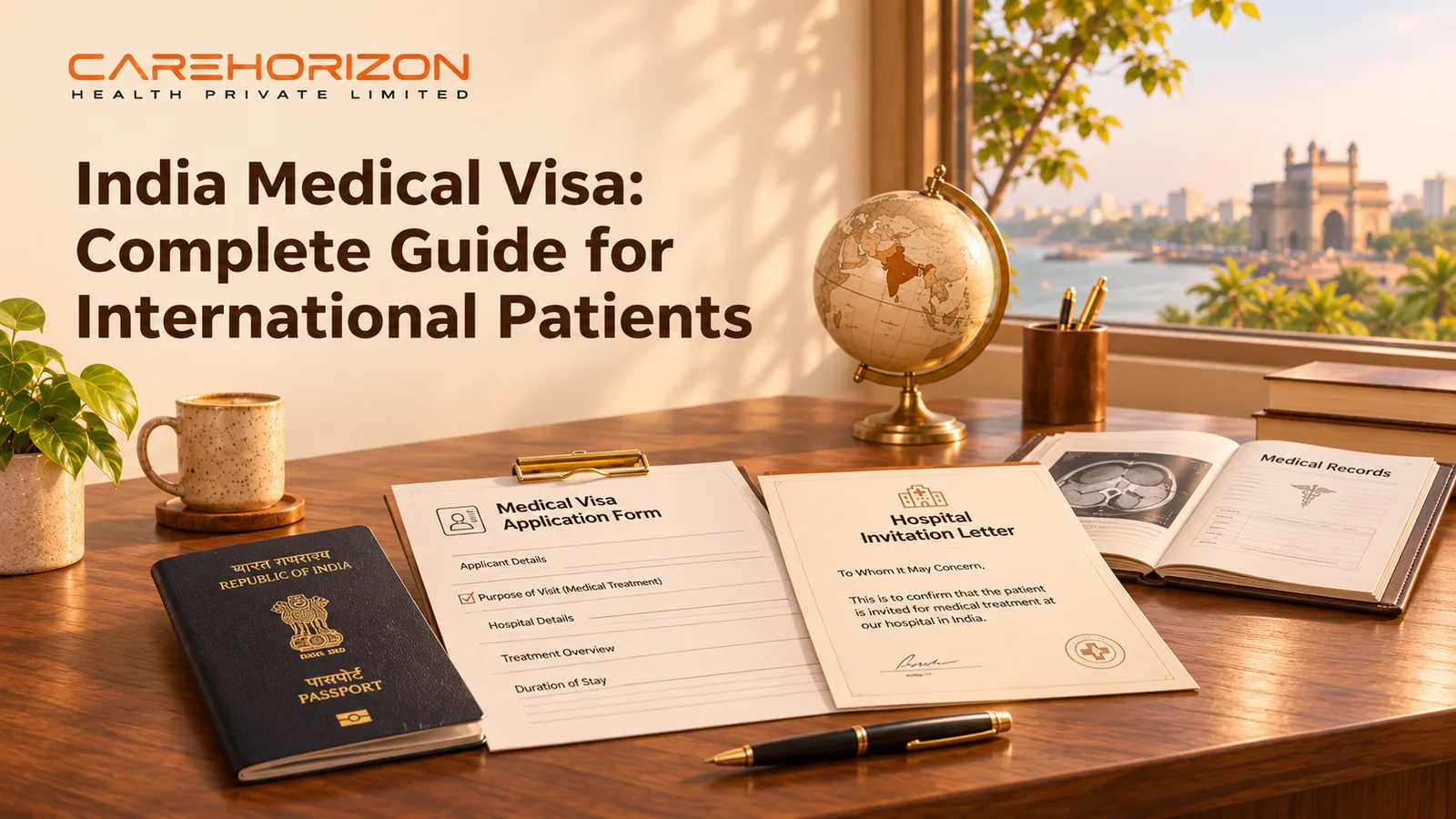
Uzbekistan appears on the Government of India's current list of nationalities eligible for the Indian e-Visa facility. For qualifying medical treatment, an e-Medical Visa may therefore be an option; eligible accompanying persons may apply for e-Medical Attendant Visas. The applicant must meet all category-specific conditions and verify current eligibility on the official portal before applying.
Official e-Visa portal: https://indianvisaonline.gov.in/evisa/ . The Government of India also provides a separate application route for regular visas: https://indianvisaonline.gov.in/visa/ . Where the patient's situation does not fit the e-Visa route, ask the Embassy of India in Tashkent about the regular medical visa requirements.
Documents generally required for an e-Medical Visa
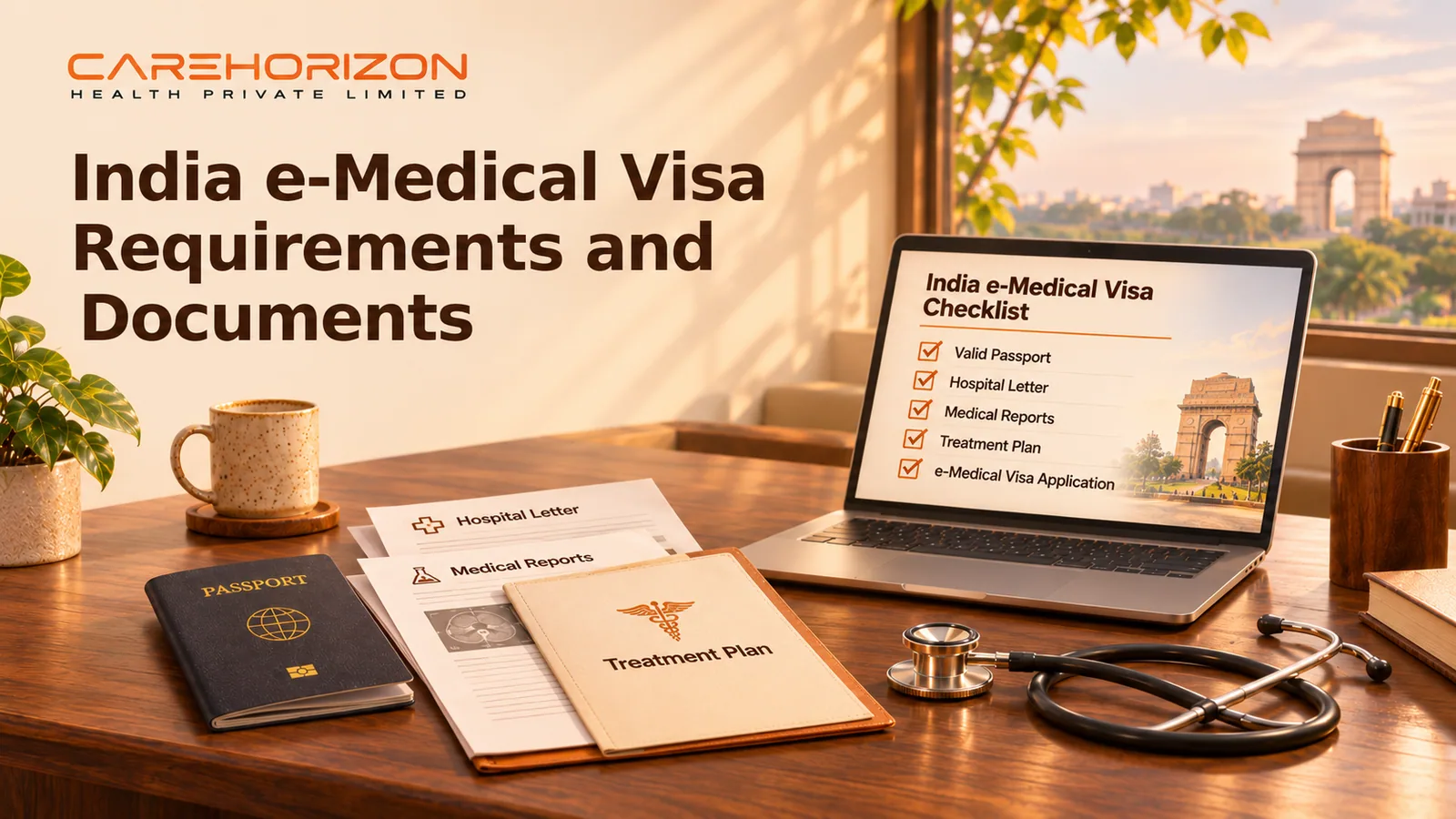
The official e-Visa guidance requires a clear scanned passport biographical page and a suitable recent photograph. An e-Medical application also requires a letter on the Indian hospital's letterhead indicating the date or tentative date on which admission or treatment is suggested. Applicants need a valid eligible passport, sufficient funds and the onward or return travel documentation required by immigration rules.
The official eligibility guidance specifies at least six months' passport validity at application and two blank pages. Check the current portal's requirements and the particular passport being used, especially if the patient has multiple citizenships or holds a non-ordinary travel document.
When should the application be submitted?
The official portal says eligible e-Medical and e-Medical Attendant applicants may submit their applications at least four days before arrival, with an arrival-date selection window of up to 120 days. This is an application-window rule, not a guaranteed processing time or instruction to wait until the last four days. Apply early enough to accommodate document corrections and possible delays.
Can family members accompany the patient?
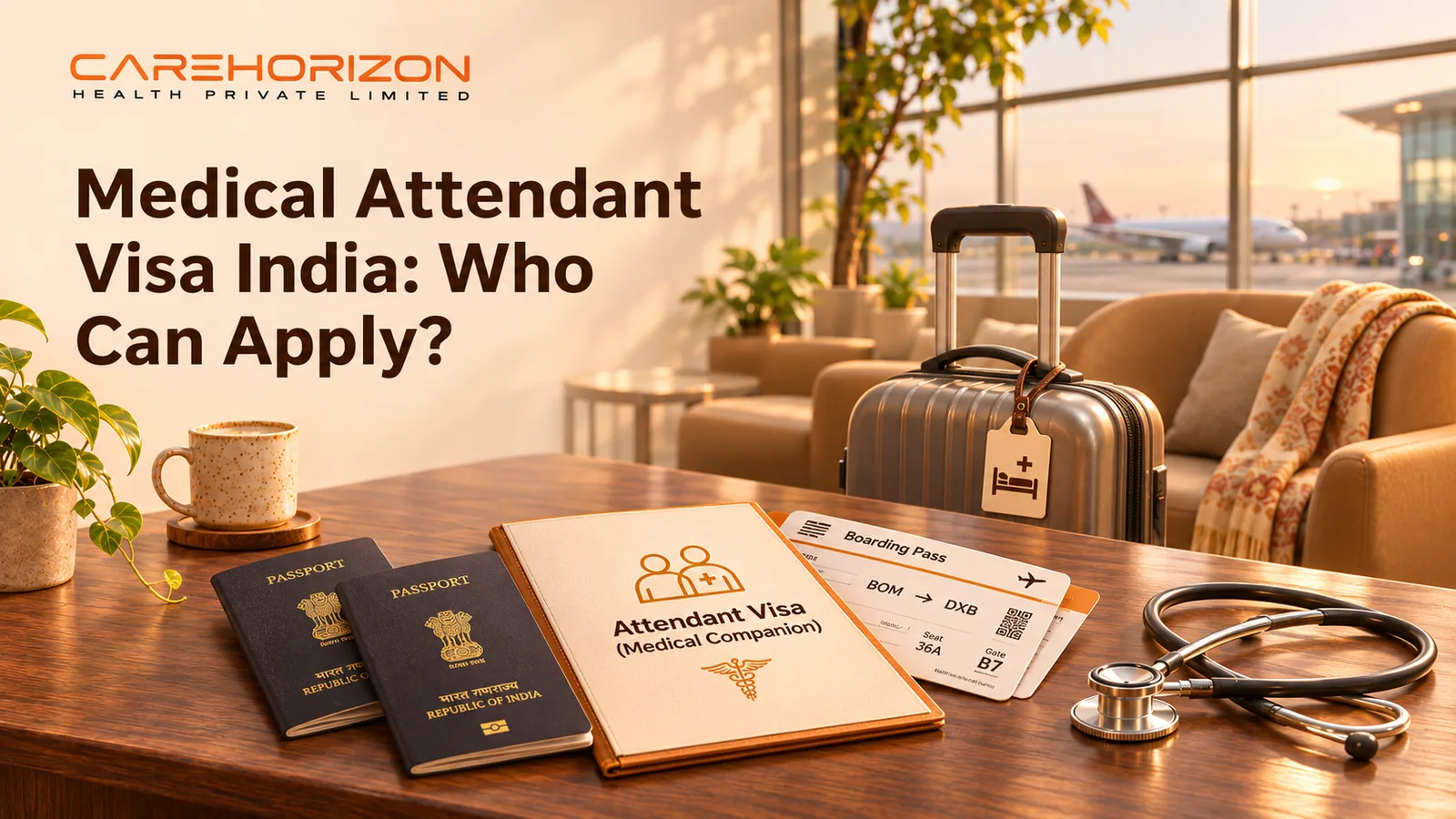
The general Indian e-Visa guidance states that up to two e-Medical Attendant Visas may be granted against one e-Medical Visa. Each attendant needs a separate qualifying application. The permitted stay and relationship to the principal patient must satisfy the current visa conditions. If more support is required, discuss the lawful options with the Indian Mission instead of assuming an additional companion can enter on the same permission.
Where can an e-Visa holder enter India?
Indian e-Visa holders must use authorised immigration checkpoints for entry. The official portal lists designated international airports and certain other points, and those lists can change. Confirm that the intended airport is currently permitted for the actual visa category. A departure itinerary and the subsequent journey to the hospital should be checked against those rules.
What about the e-Arrival card?
The Indian government now operates an electronic arrival information process for foreign travellers. It is separate from the visa itself. Check current arrival-card instructions at the official Indian visa or Bureau of Immigration website, including timing and any exceptions, before flying.
Avoid unofficial visa websites and anyone claiming to guarantee urgent approval. The Government of India says that it does not authorise agents to charge emergency or express e-Visa fees. Always verify payment instructions on the government portal.
Step 4: Obtain the Correct Indian Hospital Letter
The e-Medical application requires a formal letter from the receiving hospital in India, not merely a screenshot of an appointment conversation. The official portal asks for a hospital letter on its letterhead that includes the date or tentative date of admission or treatment.
Ask the hospital's verified international patient or admissions contact what documents it needs to prepare the letter. The patient may need to provide passport details and current medical records. Before submitting the letter, carefully check the spelling of names, passport number, hospital identity and intended date.
For some medical visa processes, hospitals may need to use government-specified invitation formats or systems. The receiving hospital and the relevant Indian Mission can advise which procedure applies. A hospital invitation is supporting evidence; it does not guarantee visa approval, admission or a medical outcome.
Step 5: Plan Travel from Uzbekistan to India
Families may start their journey in Tashkent or another Uzbek city and fly to a major Indian airport, potentially with a connection. Flight schedules, operating carriers, transit visa rules and baggage conditions can change, so avoid relying on a route listed in older travel articles. Choose a route based on the destination hospital, the patient's mobility and medical needs, and the approved visa entry point.
If the patient is recovering from surgery, has a significant heart or lung condition, requires supplemental oxygen or cannot sit upright for a prolonged flight, the treating medical team should assess fitness to fly. The airline may require a medical form or approval for special assistance. A valid visa is not proof that flying is medically safe.
When a medical escort may be needed
A qualified medical escort may be considered when the patient requires assistance, observation or intervention during a commercial flight. For more complex cases, options may include an airline-approved stretcher arrangement, ground ambulance or specialist air ambulance. The transport plan must be based on clinical assessment, airline rules and the actual equipment and personnel available.
Related reading: What Is a Medical Escort on a Commercial Flight? — /blog/what-is-a-medical-escort-on-a-commercial-flight
Related reading: When Is a Commercial Airline Stretcher an Option? — /blog/when-is-a-commercial-airline-stretcher-an-option
Step 6: Build a Realistic Treatment and Travel Budget
The full cost of medical treatment in India from Uzbekistan is not the same as the quoted procedure price. Medical charges vary according to the diagnosis, hospital, tests, procedure, complications, room type, length of admission and rehabilitation needs. Request an itemised hospital estimate instead of trusting an online price chart.
Direct medical expenses
Possible charges include specialist appointments, laboratory tests, CT or MRI scans, procedures or surgery, anaesthesia, operating theatre fees, hospital room and nursing charges, intensive care, medicines, consumables, rehabilitation and follow-up consultations.
Non-medical expenses
Budget for visas and permitted processing charges, flights, transfers, accessible accommodation, meals, interpretation, attendant travel and any additional days caused by changes in the clinical plan. Also consider currency conversion and cross-border payment arrangements.
Ask whether a quotation is fixed or provisional, which expenses are excluded, what payment methods the hospital accepts and whether a deposit is needed. Keep a contingency for unforeseen but plausible changes in care and length of stay.
Related reading: What Should an International Medical Treatment Estimate Include? — /blog/what-should-an-international-medical-treatment-estimate-include
Step 7: Arrange Accommodation, Transfers and Interpretation
Choose accommodation near the actual treating hospital, not just near the city centre. Consider accessibility, a lift, the patient's ability to travel to appointments, hygiene, meal options and flexible booking terms. A family accompanying a patient for several weeks has different needs from someone attending a one-day consultation.
Confirm the arrival airport, pickup instructions, destination address and the patient's mobility needs with the chosen transport provider. A normal private car may be suitable for an independently mobile passenger but not for a patient requiring oxygen, monitoring or clinically supervised movement.
Uzbek and Russian language support should be requested in advance. Do not assume every international patient desk offers both languages. For medical consent, diagnoses, risks and medication instructions, ask about qualified interpretation and whether a fee applies. Relatives may help with routine logistics but complex consent conversations deserve accurate professional language support.
Related reading: Airport Pickup for International Medical Patients: What to Arrange — /blog/airport-pickup-for-international-medical-patients-what-to-arrange
Related reading: Planning Accommodation Near an Indian Hospital — /blog/planning-accommodation-near-an-indian-hospital
Related reading: Interpreter Services for International Patients in India — /blog/interpreter-services-for-international-patients-in-india
Step 8: Prepare for Hospital Registration and Treatment
Keep the passport and visa or electronic travel authorisation, hospital invitation, appointment confirmation, medical reports, prescriptions, previous discharge summaries, emergency contacts and payment information ready for registration. Verify whether the hospital requires additional identification, deposits or consent documentation.
The doctor may recommend further diagnostic tests after examining the patient in person. Ask for a written explanation of the treatment options, principal risks, expected recovery and any change in anticipated costs before consenting to a procedure. Clinical decisions belong with the patient and the qualified medical team, not an independent travel coordinator.
Related reading: How to Prepare for Hospital Registration in India — /blog/how-to-prepare-for-hospital-registration-in-india
Step 9: Plan Recovery and Follow-Up in Uzbekistan
Before discharge, request a complete discharge summary, prescriptions, copies of significant tests, rehabilitation recommendations, wound-care instructions if relevant, and clear advice about warning symptoms. Ask the Indian treating doctor when the patient can safely travel and whether special airline or ground support is needed for the return journey.
Where possible, agree how follow-up will continue with the treating doctor in Uzbekistan. Some repeat tests or medication reviews may be performed locally, while other cases require an Indian specialist's further assessment. A discharge from hospital does not automatically indicate fitness for a long flight.
If the planned stay must be extended, verify the actual visa validity and obtain advice from the competent Indian immigration authority before the permitted period ends. A hospital appointment does not automatically extend the visa.
Practical Checklist for Patients Travelling from Uzbekistan
☐ Discuss the reason for treatment abroad and fitness to travel with the treating doctor.
☐ Organise clinical reports, scans, prescriptions and suitable translations.
☐ Shortlist Indian hospitals based on the diagnosis and relevant specialist.
☐ Obtain a written hospital review, appointment and required invitation letter.
☐ Confirm e-Medical or regular medical visa eligibility and document requirements.
☐ Prepare separate e-Medical Attendant applications where applicable.
☐ Check the permitted entry airport and any arrival information requirement.
☐ Request a written medical estimate with inclusions and exclusions.
☐ Confirm clinical fitness for the proposed flight and airline approval if necessary.
☐ Arrange suitable airport transfer, accommodation and language support.
☐ Keep passport, visa, hospital correspondence and medical files accessible.
☐ Confirm discharge instructions, travel fitness and follow-up in Uzbekistan.
How Can a Medical Travel Coordinator Help?
A medical travel coordinator can help families manage the practical interfaces between an Indian hospital, accommodation providers, transport services and the patient's support network. Depending on the agreed service scope, this can include organising information for hospital enquiries, tracking appointment confirmations, assisting with transfer planning and clarifying which party is responsible for each step.
This is not a replacement for clinical case management or immigration advice. Hospitals and qualified clinicians decide treatment and admission, government authorities determine visas, and airlines and medical transport providers decide whether they can safely carry a particular patient.
Related reading: What Should a Medical Travel Coordinator Do for You? — /blog/what-should-a-medical-travel-coordinator-do-for-you
How Carehorizon Health Supports Medical Travel
Carehorizon Health coordinates arrangements around clinical care, including travel for treatment, inter-hospital transfers and medical transport planning as appropriate to each case and the agreed services. For patients travelling from Uzbekistan, the practical priorities may include aligning the receiving hospital's requirements with the patient's travel fitness, arrival transfer and family arrangements.
Carehorizon Health does not issue visas, guarantee hospital acceptance, make treatment decisions or promise outcomes. Each clinical, immigration or transport decision remains with the responsible professionals and authorities.
Frequently Asked Questions
1. Can Uzbek citizens travel to India for medical treatment?
Yes, subject to having the appropriate entry permission, a suitable receiving hospital and any required medical fitness clearance. The official Indian e-Visa eligibility list includes Uzbekistan.
2. Can Uzbek patients apply for an Indian e-Medical Visa?
Eligible Uzbek passport holders may use the e-Medical Visa pathway, subject to the live rules and documents. Check the official Government of India portal at the time of application.
3. Is a hospital letter needed?
The Indian e-Medical Visa application requires a letter from the Indian hospital on letterhead, including the suggested or tentative date of admission or treatment.
4. Can a family member accompany the patient?
The general e-Visa guidance allows up to two e-Medical Attendant Visas against one e-Medical Visa. Each attendant must be eligible and apply for the proper permission.
5. How early can I apply for an e-Medical Visa?
The current official application window is at least four days before the proposed arrival, with eligible applicants able to select dates within a 120-day window. This is not a promised approval timeline, so applicants should allow additional time.
6. Which Indian city is best for patients from Uzbekistan?
No single city is best for every condition. Select a named hospital and specialist based on medical suitability, available services, appointment timing, travel practicality and total cost.
7. Will someone speak Uzbek or Russian at the hospital?
Interpretation may be available at some hospitals, but it should be requested and confirmed in writing. Do not assume the service is available at every institution or appointment.
8. What if the patient cannot travel on a normal commercial flight?
The treating team and transport provider should assess the patient's needs. Where clinically appropriate, options may include a qualified escort, carrier-approved stretcher, ground ambulance or specialist air ambulance.
9. What happens if treatment takes longer than expected?
Ask the hospital for updated clinical documentation and consult the appropriate Indian immigration authority before visa expiry. Additional treatment alone does not automatically authorise an extended stay.
Final Thoughts
Medical treatment in India from Uzbekistan should begin with a defined clinical need and a hospital capable of assessing the patient's condition. A correctly prepared hospital letter and an appropriate medical visa are important, but they work best as part of a broader plan covering travel fitness, realistic costs, interpretation, accommodation and follow-up.
Carehorizon Health can help coordinate the practical journey around treatment while doctors, hospitals, immigration authorities and transport providers retain their respective responsibilities.
Planning Medical Treatment in India from Uzbekistan?
Contact Carehorizon Health to discuss medical travel and transport coordination requirements.
Official Sources and Verification
- Government of India — official e-Visa portal, current nationality eligibility, e-Medical documents, attendants and authorised entry points: https://indianvisaonline.gov.in/evisa/
- Government of India — regular visa application: https://indianvisaonline.gov.in/visa/
- Government of India — authorised Indian visa portal and e-Arrival information: https://indianvisaonline.gov.in/
- Ministry of Home Affairs — medical visa guidance: https://www.mha.gov.in/sites/default/files/2022-09/AnnexIIIDetailsofVisas20082020%5B1%5D.pdf
- Embassy of India in Tashkent — verify current consular instructions through the official mission website before choosing a regular visa route.
Clinical, immigration, financial and publication disclaimer: This article is general information, not medical or immigration advice. Visa eligibility, permitted entries, duration, documentary requirements, payments, arrival rules, flights and hospital availability may change. Medical professionals decide treatment and fitness to travel; government authorities decide visa permission; transport operators decide acceptance. Carehorizon Health does not guarantee visas, hospital admission, third-party services or outcomes. Verify all internal-link destinations and time-sensitive guidance before publication.
Carehorizon Health coordinates medical travel, patient transfers and related arrangements. The information here is educational; it does not diagnose, prescribe, guarantee an outcome or replace advice from your treating medical team. Service availability, costs and travel requirements are confirmed case by case.