This article provides general information to support better planning. Individual medical decisions and fitness for travel require assessment by qualified treating professionals.
An international patient may have an Indian hospital's invitation letter, an approved medical visa and a flight reservation yet still face unexpected questions at the registration desk. The hospital may need to verify identity, open or locate a patient record, confirm the appointment department, check prior reports, explain an estimated deposit and identify the person authorised to receive updates. Knowing what to carry and whom to contact can make the first hospital visit more organised.
Hospital registration is not the same as immigration clearance, clinical admission or informed consent. Immigration officials decide whether a traveller may enter India. Hospital administration records the patient's identity and billing information. Doctors decide which tests and treatment are appropriate, while the patient participates in decisions through the hospital's consent process. These steps may occur close together, but they should not be mistaken for one approval.
This guide explains hospital registration international patient India procedures in practical terms, from documents and appointment confirmation to deposits, insurers, relatives, interpreters, medical records and what to do if a treatment plan changes after arrival. Requirements are not identical across Indian hospitals, so the receiving hospital's written instructions remain essential.
What Hospital Registration Actually Means
Registration is the administrative process through which the hospital creates or updates a patient record, confirms identity and contact details, and directs the person to the correct consultation, diagnostics or admissions team.
It may include receiving copies of a passport and visa, checking appointment information, issuing a hospital identification or patient number and explaining the next administrative step. It does not itself guarantee a hospital bed or a particular clinical procedure.
Registration, Consultation and Admission Are Different
An outpatient consultation is usually a scheduled encounter with a clinician. Admission is a separate process for inpatient care, subject to clinical recommendation, availability, hospital policy and financial arrangements.
A patient who has an appointment at a hospital does not necessarily have an approved inpatient admission. Ask whether the first visit is registration for an outpatient opinion, pre-admission assessment or the actual date of admission.
Confirm the Exact Hospital Campus
Large Indian healthcare groups may have more than one hospital or specialist location in a city. Verify the campus address, correct entrance, registration desk and department before leaving the airport or hotel.
Do not rely on the hospital brand alone. A patient may have been reviewed remotely by a clinician who works at a different campus from the one printed in an older email.
For related preparation, see choosing a hospital in India.
Ask for the Hospital's Own Registration Checklist
Contact the hospital's international patient or admissions team and ask which documents are required for the planned service. Request confirmation of whether originals are inspected and which copies may be retained.
Some hospitals use pre-registration forms, while others complete records after arrival. There is no sound basis to claim one universal registration form or deposit applies to every Indian institution.
Check Whether the Appointment Is Confirmed
Keep a message identifying the clinician or department, appointment date, time and campus. Ask whether registration should occur before the appointment and whether new tests are scheduled that day.
A general enquiry acknowledgement or preliminary opinion is not automatically a confirmed slot. Ask who can verify the booking if travel dates or clinical plans change.
Original Passport for Identity Verification
Carry the valid original passport accessible in hand luggage. The hospital may inspect it and record identifying information according to its procedures for foreign patients.
India's official visa portal describes passport and immigration permission as travel requirements, but that does not mean every hospital must physically retain the passport. Ask for a clear explanation if any original document is requested for custody.
Visa or Electronic Travel Authorization
Bring the issued medical visa or granted e-Medical Electronic Travel Authorization and any relevant arrival information. Confirm that the travel permission corresponds to the patient's passport.
A payment confirmation or application reference does not replace an approved visa. Hospital registration staff cannot fix an immigration status problem simply by creating a patient file.
Hospital Letter and Registration Letter Are Not Identical
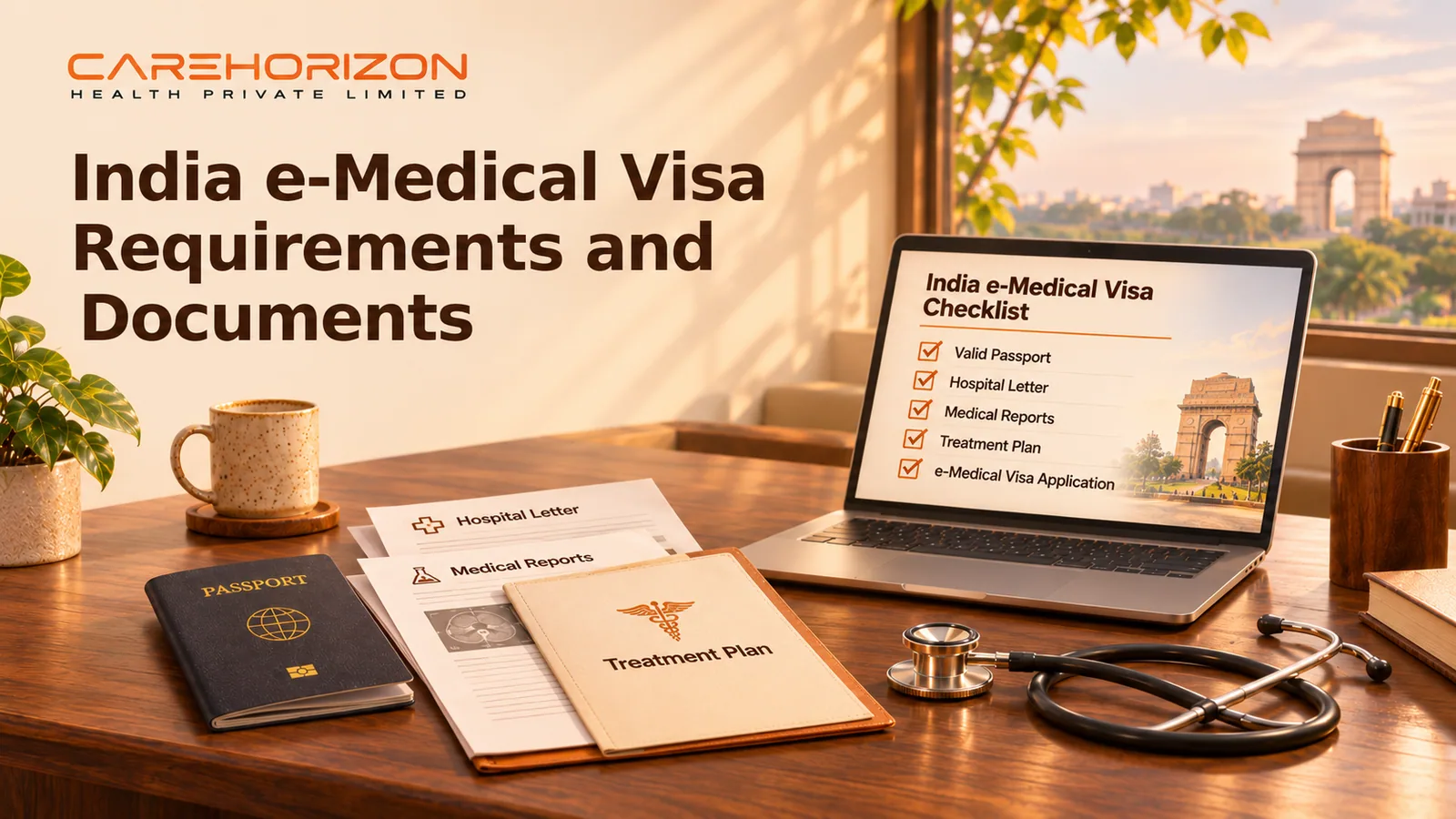
For an eligible e-Medical application, the Indian government requires an authentic letter from the concerned Indian hospital with a tentative date for treatment or admission and specified identifying details.
That letter is primarily immigration-support documentation. The hospital may also issue an appointment or pre-admission confirmation containing operational instructions for check-in. Keep both when provided.
For related preparation, see medical visa planning guidance.
What If the Passport Was Renewed?
A passport renewal can change the identifying number on older hospital records, visa correspondence and booking information. Inform the hospital and review official immigration guidance applicable to the issued visa.
Avoid asking staff to overlook differences without explanation. Ask what evidence is needed to reconcile the new identity document with the existing hospital patient file.
Patient Name, Nationality and Contact Details
Registration commonly involves the patient's legal name, date of birth, nationality, address, telephone and emergency contact. Make sure details are consistent with the passport and hospital correspondence.
Provide the contact method most likely to work in India. A mobile number from another country may have roaming restrictions; a relative's local number can supplement but should not replace the patient's identity.
The Current Medical Summary
Prepare a concise dated summary of relevant conditions, symptoms, prior interventions, significant allergies and medications. The originating clinician's summary is preferable to an unverified description written by an agent.
A registration officer may scan documents, but qualified clinicians must review and interpret medical content. Do not assume uploading a record means a doctor has accepted every finding.
For related preparation, see organising medical records.
Relevant Laboratory and Imaging Reports
Bring the reports most relevant to the consultation, including recent laboratory work, imaging reports and original digital studies where requested. Arrange them chronologically with report dates clearly visible.
The hospital may repeat investigations based on its clinical assessment. Previous results are useful background but cannot substitute for tests the treating team determines are necessary.
For related preparation, see sending records to Indian hospitals.
Previous Surgery and Discharge Records
A prior operation note, implant information or discharge summary can help the receiving team understand treatment history. The need for old documents depends on the current medical question.
Keep original records where available and share accurate copies. The CDC recommends that medical travellers bring relevant records and give clinicians an accurate account of prior treatment.
Current Medicines and Allergies
Have a list of prescribed medicines, generic names when known, doses, schedule and important allergies. Bring genuine prescriptions and keep medicines in original packaging where possible.
A physician or pharmacist should reconcile medicines at the first clinical encounter. A travel coordinator or registration clerk should not change doses or advise stopping treatment.
What to Do When Records Are in Another Language
Ask the hospital whether it can review the documents in their original language or whether professional translation is needed for the relevant portions. Keep the originals with any translated copy.
Avoid relying on an unverified automatic translation for dosage, diagnosis or consent. Translation needs should be identified before an appointment when possible.
Original Files Versus Digital Copies
A secure digital folder can help carry large imaging studies and historical documents. Nevertheless, a hospital may ask for specific originals, printed results or media that can be imported into its system.
Confirm the acceptable formats and how to transmit files securely. An ordinary photograph of a scan report may not include all information required for specialist review.
The Patient's Written Treatment Plan
If a specialist has supplied a provisional written plan, carry it for the registration and consultation process. Label what is confirmed and what depends on in-person examination.
A preliminary plan does not guarantee surgery. The receiving clinician may recommend more tests, another treatment or no procedure after assessment.
For related preparation, see treatment in India process.
Understanding the Hospital Estimate
Keep a dated estimate and any explanatory email about proposed procedures, room category, inclusions and exclusions. A quote for anticipated treatment is distinct from the amount actually payable at registration.
Ask the billing department how the estimate could change after tests or clinical review. An informal package figure should not be treated as a final hospital bill.
For related preparation, see understanding hospital estimates.
Hospital Deposits and Advance Payments
Hospitals may request an advance payment before admission or certain services, but amount, timing, refundable balance and acceptable methods vary. Ask for the specific hospital's written policy.
Verify the actual beneficiary and payment link through official channels. Avoid sending an unexplained deposit to a personal account on the strength of a forwarded message.
Request a Written Deposit Breakdown
Before paying, ask what the advance covers, whether it is credited against the final bill and when any unused balance may be refunded. Also clarify charges for registration, consultation and investigations.
A deposit does not create entitlement to a procedure that the treating doctor considers inappropriate. Payment and clinical consent should remain separate decisions.
Payment Methods for Foreign Patients
Ask whether the institution accepts major international cards, bank transfers, insurer authorisations or other permitted payment routes. Check transaction fees and foreign-exchange treatment.
Payment options differ by institution and country. Do not assume a foreign card will work or that a cashless insurance arrangement has already been authorised.
Insurance Policy and Guarantee of Payment
Carry policy information, the insurer's case reference and any written preauthorisation or guarantee of payment. Confirm which hospital entity and services the insurer has approved.
An insurance card is not proof that a specific procedure, complication or room upgrade will be reimbursed. The billing team and insurer should clarify direct billing and patient-paid exclusions.
For related preparation, see insurance and money planning.
Third-Party Payers and Family Payments
If a relative, employer or sponsor is paying, ask which documents the hospital needs to identify the responsible payer and issue accurate receipts.
Financial responsibility should be documented without giving unauthorised people unlimited access to the patient's medical information.
Know the Admission Category
Ask whether the patient is registering as outpatient, day-care, emergency, planned inpatient or another service category. Different workflows may have different deposits, counters and consent forms.
The treating clinician and hospital determine the correct clinical and operational category. Do not choose a lower-cost label that misstates the proposed care.
The Role of a Medical Attendant
An accompanying family member may help with paperwork, payment, transport and communication. A medical attendant visa is an immigration category and does not itself create decision-making authority over the patient's care.
The patient may need to authorise a relative to receive information or manage specified administrative tasks. Ask the hospital about its consent and representative procedures.
For related preparation, see guide for patient attendants.
If More Than One Relative Is Present
Hospitals may limit the number of people accompanying the patient into clinical areas or staying overnight. Registration permission, visiting access and immigration eligibility are distinct.
Choose a main contact person if that helps avoid conflicting instructions, while respecting the patient's wishes and rights. Do not assume every relative can receive confidential updates.
Language Support at Registration
An international patient may need assistance with identity forms, deposits or understanding where to go. Ask whether the hospital has staff or interpretation arrangements for the patient's preferred language.
For clinical decisions and consent, request competent interpretation rather than relying only on casual translation by a driver or untrained family member.
For related preparation, see international patient language support.
Understand Administrative and Clinical Consent Forms
Registration may include privacy notices, contact authorisations and financial acknowledgements. Procedures, anaesthesia or other clinical interventions may require separate informed consent discussions.
A signature on a registration form should not be presented as a substitute for the clinician's explanation of options, benefits and risks. Ask the hospital to explain unfamiliar documents before signing.
Privacy and Medical Records
Passports and health records contain sensitive information. Share them through verified hospital channels and ask who will have access to the information.
Do not post passport copies or complete medical files to public links or unknown coordinators. The patient should understand how to authorise communication with relatives.
Preparing for the First Consultation
Write down the main questions: What diagnosis is confirmed? What remains uncertain? Which additional tests are needed? What are the reasonable options? What may change the proposed estimate?
Bring the concise clinical history and allow time for questions. A rushed registration process should not force the patient into an immediate clinical decision.
For related preparation, see second opinion guidance.
If the Doctor Orders More Tests
The clinician may ask for fresh imaging or laboratory tests after examining the patient. Confirm whether they require new registration or payment and when results will be reviewed.
A different test plan may affect the length of stay and total cost. Ask for updated medical and financial information rather than treating every new order as part of the original package.
If Surgery Is Not Yet Approved
Preliminary discussion or an invitation letter does not establish a final surgical decision. The responsible specialist may require preoperative assessment or decide against the originally contemplated intervention.
The patient should receive an understandable explanation of the new recommendation and any administrative steps before consenting or making additional payments.
If the Hospital Wants to Admit the Patient
Ask the admissions team for the relevant room or ward process, estimate, deposit, identity documentation, visiting rules and expected clinical handover.
A hospital's administrative acceptance and the treating team's clinical decision must be aligned. If there is no bed available, the hospital should explain the next appropriate process.
Emergency Arrival Is Different
If the person is acutely unwell, emergency clinical assessment should take priority over ordinary planned registration. The hospital's emergency workflow may be different.
Do not delay urgent care to complete forms, obtain a package quote or wait for a routine international patient appointment.
Airport Arrival and Registration Are Separate
The airport transfer provider should know the correct campus and drop-off location, but the vehicle booking does not register the patient or guarantee a bed.
If the person requires medically supported transport, the sending and receiving clinical teams should coordinate the appropriate handover.
For related preparation, see arriving in India for treatment.
Time Needed for Registration
Registration time depends on the hospital, appointment schedule, whether records are complete, admission requirements and payment or insurance issues.
Avoid giving a universal number of minutes. Ask the hospital when to arrive and allow a reasonable buffer for first-time identity verification.
Confirm the Patient Identifier
Once registration is complete, the hospital may issue a unique patient ID or registration number. Keep it accessible for future appointments and bills.
Verify that it corresponds to the correct patient. Incorrectly linked records can create administrative and clinical confusion.
Check the Correct Billing Identity
Confirm the patient's legal name, payer details and invoice information as required by the hospital. If the person paying is not the patient, ask how the receipt identifies the transaction.
Correct an error promptly rather than waiting until discharge or an insurance submission. A visa application and billing receipt do not necessarily use the same reference number.
Keep Copies of Every Receipt
Save receipts for registration, deposits, investigations and other payments. Ask which expenses appear in the final invoice and which are separately billed.
Receipts can assist with personal records and insurance claims, though their existence does not guarantee reimbursement.
Before Leaving the Registration Desk
Confirm the next location, time of consultation, outstanding documents, responsible contact, payment status and any instructions for accompanying persons.
If a patient needs wheelchair assistance or language interpretation, verify who will provide it inside the hospital rather than assuming the arrival service continues automatically.
A Seven-Part Registration Checklist
Identity: original passport and appropriate visa or ETA. Hospital: actual campus, appointment and genuine invitation. Clinical: referral, relevant reports, imaging and medicine list.
Finance: estimate, deposit and insurer documentation. Communication: patient and authorised contact details. Accessibility: necessary mobility or language support. Follow-up: patient ID, next appointment and receipts.
For related preparation, see documents for treatment in India.
Scenario: First-Time Outpatient Consultation
A patient arrives for a second opinion without a confirmed operation. Registration staff verify identity and appointment details, and the clinician reviews reports before recommending next steps.
The patient does not assume that a preliminary package quote includes every investigation. This is a hypothetical example, not a hospital-specific procedure.
Scenario: Planned Admission With Insurance
A patient has tentative admission arrangements and an insurer's preauthorisation. The family confirms that the guarantee applies to the actual hospital, room category and proposed service.
The hospital clarifies any deposit or uncovered charges, and the clinician completes assessment before treatment. Approval and final billing are separate decisions.
Scenario: Passport Number on Letter Is Wrong
A patient notices that the hospital letter has an outdated passport number. The family asks the issuing hospital to correct its genuine records and seeks official guidance if the visa is affected.
They do not change a signed PDF themselves. This illustrates the benefit of reconciling identifying information before departure.
What to Arrange for Discharge From the Beginning
Before admission, ask how discharge summaries, operative notes, updated medicines, test results and final bills are provided. Identify how a doctor at home will receive relevant follow-up information.
The CDC advises medical travellers to obtain copies of overseas medical records and share them with clinicians who provide subsequent care.
For related preparation, see after-discharge recovery and follow-up.
How Carehorizon Health Can Help Prepare
Carehorizon Health Private Limited coordinates the journey around clinical care. Depending on an enquiry, coordination may include organising records, requesting authentic hospital correspondence, clarifying check-in instructions and aligning travel details.
Carehorizon does not register patients as a hospital, grant visas, promise admissions, make clinical decisions or guarantee billing or insurance outcomes. Hospitals, clinicians, immigration authorities and insurers retain their own responsibilities.
For related preparation, see how Carehorizon works.
Frequently Asked Questions
Which documents does an international patient need for hospital registration in India?
Hospitals may ask for a passport, visa or ETA, appointment details, clinical records and payment or insurance information. Confirm the specific receiving hospital's checklist.
Is a medical visa enough to guarantee hospital admission?
No. Visa permission comes from immigration authorities; admission and treatment require separate hospital and clinician decisions.
Should patients bring the original passport to the hospital?
Carry it for identification and ask the hospital what it needs to inspect or copy. Do not assume the hospital must retain it.
Is the hospital invitation letter the same as admission confirmation?
Not necessarily. A visa-support invitation may identify tentative treatment, while admission is subject to the hospital's own process and clinical assessment.
How much deposit does an Indian hospital charge international patients?
There is no universal amount. Ask the specific hospital for a written deposit, payment and refund policy.
Can an insurer's approval replace a hospital deposit?
Only if the hospital and insurer confirm the applicable billing arrangement. A guarantee may have limits or uncovered charges.
Can a relative sign forms for the patient?
That depends on the patient's capacity, authorisation, the form and applicable law. A relative's presence does not automatically confer authority.
Will a hospital accept medical records from another country?
Many can review foreign records, but file formats, translation needs and additional investigations depend on the treating team.
What if the doctor changes the treatment plan at registration?
Ask for an explanation from the clinician and an updated estimate from the hospital before agreeing to changed care, subject to emergency needs.
Does Carehorizon register international patients directly?
Carehorizon may coordinate practical preparation, while the actual hospital completes registration and clinicians decide care.
Official and Clinical Sources
- Government of India — Indian Visa Online, Official Visa and Entry Requirements: https://indianvisaonline.gov.in/
- Government of India — e-Visa Medical Requirements and Hospital Letter: https://indianvisaonline.gov.in/evisa/
- Government of India — e-Visa FAQ, Hospital Letter Identification: https://indianvisaonline.gov.in/evisa/tvoa.html
- CDC — Medical Tourism: Preparing Medical Records, Costs and Follow-Up: https://www.cdc.gov/yellow-book/hcp/health-care-abroad/medical-tourism.html
- CDC — Medical Tourism Travel Guidance and Prescription Records: https://wwwnc.cdc.gov/travel/page/medical-tourism
- National Accreditation Board for Hospitals and Healthcare Providers — Official Website: https://nabh.co/
For planned international patient coordination: Carehorizon Health | WhatsApp/Call +91 6292041222 | care@carehorizonhealth.com | https://carehorizonhealth.com/enquiry/
Clinical, immigration, financial and publication disclaimer: General planning information reviewed on 12 November 2026, not legal advice, a hospital registration guarantee, insurance preauthorisation, visa approval, clinical advice or a fixed deposit quotation. Actual registration processes, patient rights, consent requirements and accepted payment routes depend on the hospital, treatment and applicable rules. Medical decisions belong to clinicians; immigration authorities decide entry; insurers decide coverage. An acute medical emergency requires prompt qualified care. Internal Carehorizon links are based on the supplied site inventory and must be checked live before publication.
Carehorizon Health coordinates medical travel, patient transfers and related arrangements. The information here is educational; it does not diagnose, prescribe, guarantee an outcome or replace advice from your treating medical team. Service availability, costs and travel requirements are confirmed case by case.