This article provides general information to support better planning. Individual medical decisions and fitness for travel require assessment by qualified treating professionals.
A patient travelling to India for treatment may want a spouse, adult child or another trusted person nearby. One relative might manage hospital conversations while another handles accommodation, medicines or communication with family overseas. The practical question is understandable: how many people are allowed to accompany one medical patient?
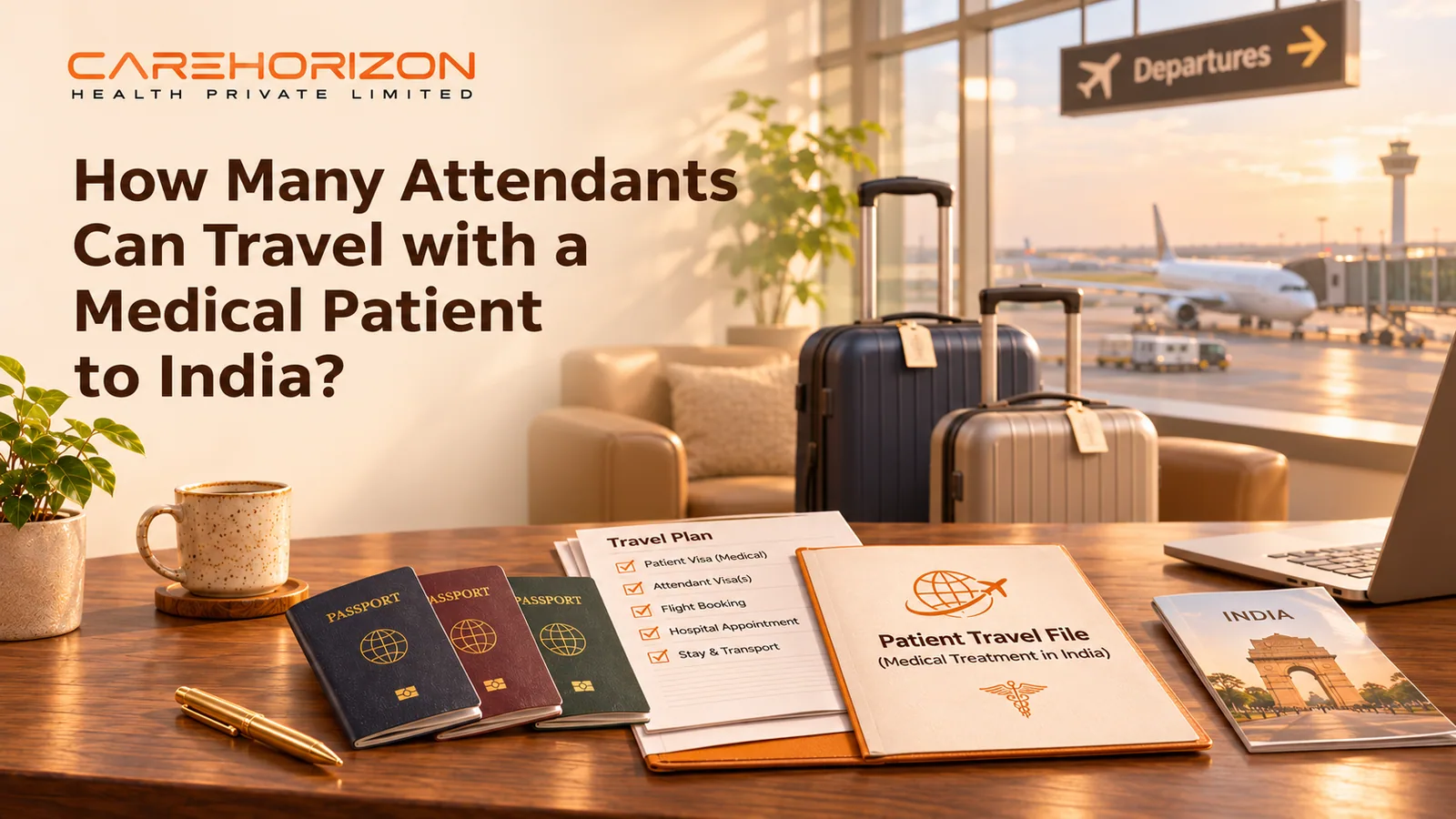
The short answer is that India's official e-Visa instructions permit only two e-Medical Attendant Visas against one e-Medical Visa. This is a limit for a specific electronic visa category, not an automatic right for any two people to enter the country. Each proposed companion must independently meet the relevant immigration requirements and receive their own permission.
Families with three or more prospective companions should not assume an exception or misstate the reason for travel. They should check whether another independently appropriate visa category exists with the responsible Indian mission or immigration authority. This guide explains the rule's scope, practical family scenarios, documents, travel timing, hospital access and the difference between an attendant and a medically trained escort.
The Official Two-Attendant Rule
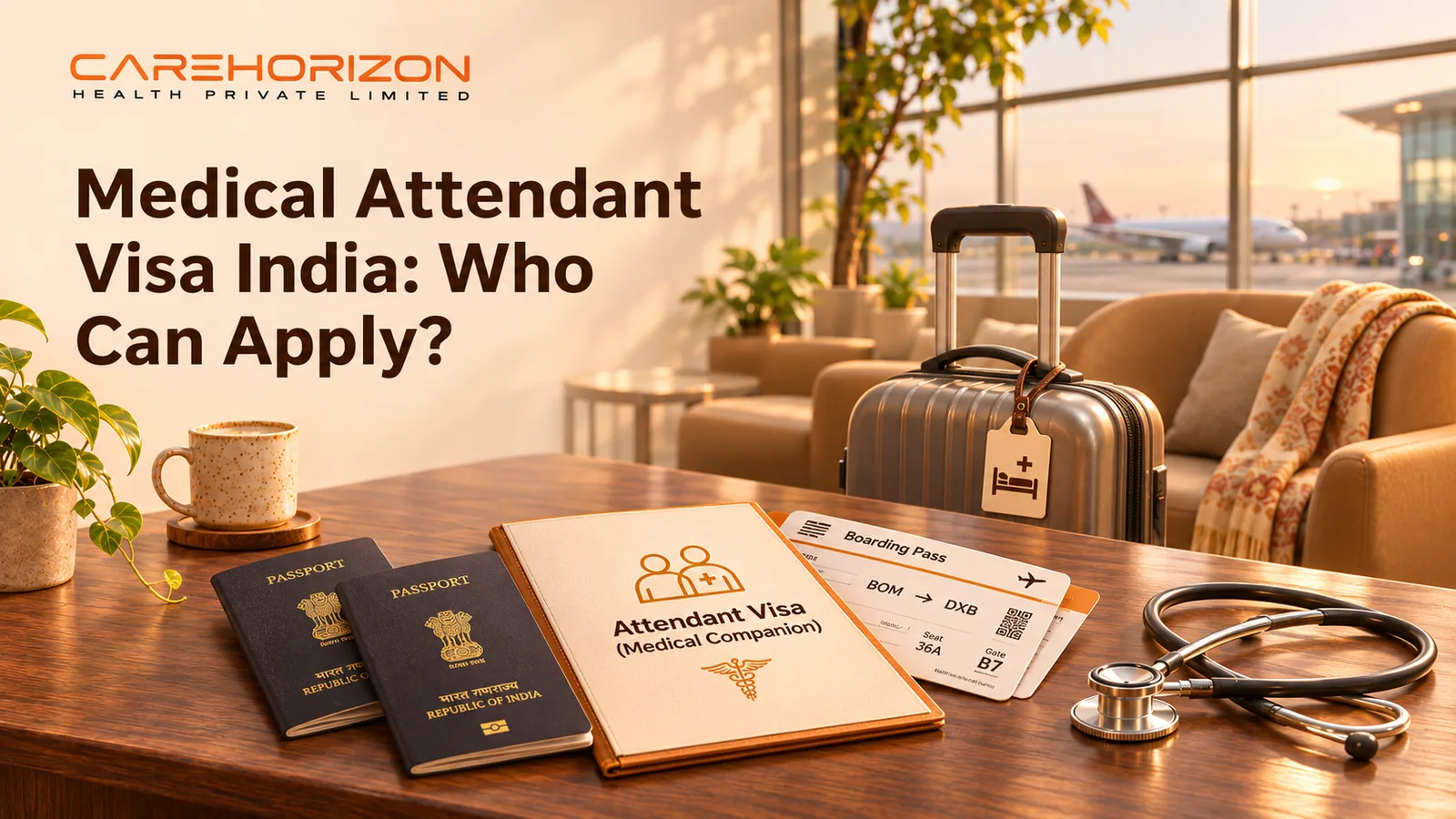
The Government of India's e-Visa general instructions state that only two e-Medical Attendant Visas will be granted against one e-Medical Visa. Its FAQ addresses this directly under the question about how many attendants can come with a patient.
The limit describes the e-Medical Attendant route attached to the principal patient's e-Medical permission. It is not evidence that every regular medical visa system, nationality-specific procedure or unrelated visa category has the same maximum.
For practical preparation, consult medical visa guidance.
What Does Two Attendants Actually Mean?
It means no more than two applications can be approved under that specific linked e-Medical Attendant entitlement for a principal e-Medical patient. It does not mean that a patient automatically receives two approvals when their own visa is granted.
Each companion has an individual application and must satisfy the prevailing requirements. Eligibility, documents, actual permission and admission at the border remain separate issues.
Does One Patient Plus Two Attendants Mean Three Travellers?
As a straightforward planning example, a patient who holds an eligible e-Medical Visa may be accompanied by up to two separately approved e-Medical Attendant visa holders under that route.
This is a maximum under the stated category, not a guarantee that any particular three travellers qualify. Passport nationality and the grant for each individual must be checked.
Is an Attendant Required to Be a Relative?
The electronic scheme describes an attendant accompanying an e-Medical Visa holder, but families should not infer a universal permitted-relationship list from that wording. The relevant application and mission may require case-specific evidence.
Spouses, adult children, parents or other support people should confirm their eligibility with the correct government route. A personal connection to the patient is not by itself legal proof of visa entitlement.
Spouse and Adult Child Accompanying the Patient
A common situation is a patient travelling with a spouse who assists with decisions and an adult child who organises daily arrangements. Each person must hold an appropriate individual permission.
The family should agree who receives hospital information and who handles transport and bookings. Being the patient's spouse or child does not replace the passport and visa application requirements.
Two Adult Children Supporting a Parent
Two adult children might each wish to accompany an older parent through investigations or surgery. Under the applicable e-Medical Attendant route, the two-person cap still applies.
Their actual eligibility and role need verification. The parent's age does not establish the need for two attendants or for medical supervision during the flight.
What if Three Relatives Want to Travel?
Three relatives cannot simply claim three linked e-Medical Attendant Visas for one e-Medical patient under the rule stated on the official portal. A family should decide who needs to be present and seek official guidance about any other genuinely appropriate independent visa route.
Do not describe a medical attendant journey as tourism unless that description is truthful and permitted. No alternative visa approval should be assumed from a blog article.
Can the Third Relative Use a Tourist Visa?
This depends on the person's genuine purpose, nationality and the rules of the proposed category. An independent visa, if available, must accurately reflect the traveller's intended activities.
It would be misleading to present a tourist visa as a standard workaround for the two-attendant cap. The Indian mission or relevant visa authority should clarify any lawful options.
Can Relatives Take Turns Accompanying the Patient?
Some families consider having different relatives arrive at different times. The published two-attendant rule does not by itself explain how replacement, overlapping approvals or changing companions will be handled.
Do not assume that sequential rotation resets the limit. Seek case-specific official advice before arranging new applications or flights.
Can One Attendant Arrive Later Than the Patient?
Families may want a companion to join after treatment begins. Whether this is possible depends on the individual's visa validity, entry conditions and any requirement linking the journey to the patient.
Verify the actual authorisation and government guidance. An attendant's flight should not be booked on the assumption that a patient's earlier admission automatically permits later entry.
Can an Attendant Remain After the Patient Leaves?
The permitted stay depends on the actual visa and any conditions linked to the principal patient. Do not assume that the attendant's status continues independently once the medical visit has ended.
If a family needs a companion to remain for other reasons, request official immigration guidance rather than relying on the original medical attendant category.
e-Medical Attendant Visa Versus Regular Medical Attendant Visa
India offers both an electronic visa route for eligible nationalities and regular consular routes that may apply to other applicants. The rules and supporting documents can vary by route.
The two-person statement is explicitly published under the e-Visa programme. For regular attendant visas, verify applicable nationality-specific policies through the relevant Indian mission rather than copying e-Visa limits as universal law.
For practical preparation, consult international patient information.
Nationality Can Change the Correct Application Route
The official e-Visa portal maintains eligibility criteria based on citizenship and passport type. A patient and attendant may hold different nationalities and therefore qualify for different processes.
Before discussing how many family members may travel, identify the route each person is actually allowed to use. A patient's e-Medical approval does not automatically make every foreign relative e-Visa eligible.
Bangladesh Families Need a Separate Eligibility Check
Bangladesh applicants should use the Indian government route designated for their nationality and consult current Indian mission or authorised visa application centre guidance. Conditions can change, including application appointments and border permissions.
Do not automatically apply a general electronic visa rule to a regular visa process for Bangladesh nationals. Both the patient and each prospective attendant need accurate, current route-specific guidance.
Other Nationality-Specific Processes
India maintains separate application arrangements for certain passport holders. Some country-specific instructions distinguish medical patients and their accompanying people and may have different documentation or visa conditions.
Avoid copying forms, quotas or permitted lengths of stay from an unrelated nationality. Confirm the exact route from official sources.
Individual Passports Are Essential
The general e-Visa guidance states that each applicant must have an individual passport. Endorsement on a parent's or spouse's passport is not sufficient for that electronic application.
Verify each person's name, passport number, expiry date and nationality. A patient's hospital letter cannot substitute for the attendant's identity document.
Passport Validity and Pages
The e-Visa instructions call for a passport valid for at least six months when applying and at least two blank pages for immigration use, subject to the current route's published conditions.
A near-expiry passport can disrupt plans even where the hospital has agreed to evaluate the patient. Check renewal implications before applying.
What Documents Does an e-Medical Attendant Need?
The government's attendant-specific document listing identifies a scan of the applicant's passport biographical page. The general e-Visa application also requires a recent compliant front-facing photograph.
The live form can request further personal or patient-linked details. It is important to distinguish what is explicitly listed for the attendant from what is required for the principal e-Medical patient.
The Patient's Hospital Letter
The e-Medical patient's application calls for an Indian hospital letter on letterhead with a tentative admission or treatment date and identifying details. That is different from the published attendant-specific upload checklist.
The companion may still need the principal patient's application information to complete the form accurately. Never invent clinical admission dates or modify official hospital correspondence.
For practical preparation, consult medical records for specialist review.
How to Link an Attendant to the Principal Patient
Maintain accurate details of the principal patient's passport, medical visa application or approval, hospital and intended journey. Check which of these items the current attendant application requires.
A family spreadsheet may help avoid inconsistencies but has no legal force. Each application is assessed through the government process.
The Patient and Attendants May Apply at Different Times
Travel planning may involve hospital appointment uncertainty or family members obtaining documents at different times. The correct sequence depends on the live application process and the individual approvals.
Do not assume that paying for three flights or submitting multiple forms creates a linked family approval. Verify each application and the hospital schedule before committing.
When to Apply for the e-Medical Attendant Route
The official e-Visa instructions describe a window from 120 days to a minimum four days before intended arrival for eligible medical and attendant applicants.
That is an application window, not a promise that a visa will be approved in four days. Plan for possible corrections, delays or changes to treatment.
For practical preparation, consult planning treatment in India.
Two Approvals Are Not Guaranteed
An application can be refused or questioned even when the numerical category limit has not been reached. Identity details, eligibility, documentation and official discretion still matter.
A coordinator, hospital or visa agent cannot promise that both companions will be approved. Avoid paid guarantees of privileged processing.
Check the Issued Visa's Validity
The government's e-Visa category table currently describes certain medical and attendant subtypes with one-year validity, while its FAQ still refers to a 60-day medical-attendant period.
This inconsistency requires caution. Confirm the actual subtype, approved Electronic Travel Authorization, immigration stamp and official clarification; do not use one general duration to plan every attendant's stay.
Visa Validity Versus Hospital Recovery
A doctor may recommend a recovery period different from the immigration stay allowed by the attendant's visa. Medical instructions do not automatically extend legal permission.
If the patient's treatment is delayed or extended, seek official immigration advice early and check the companion's actual permitted stay separately.
What Happens if Treatment Is Extended?
Additional investigations, complications or follow-up can lengthen the family's visit. The hospital can explain the clinical reasons for delay, but visa duration and extension are determined by immigration authorities.
The e-Visa FAQ describes the scheme as non-extendable and non-convertible in general. Contact the competent FRRO or official service for the case rather than assuming an exception.
Changing Hospitals or Cities
A second medical opinion may cause the patient to switch hospitals. Immigration conditions may be relevant if the issued visa or supporting paperwork identifies a particular receiving institution.
Check official guidance before changing a hospital where permission could be affected. A change in clinical recommendation does not itself authorise an immigration change.
For practical preparation, consult questions to ask before choosing a hospital.
Different Entry Points for Family Members
The e-Visa portal publishes designated arrival airports and seaports. Entry at a land border is not automatically permitted for an electronic visa.
Check every traveller's category and entry conditions, particularly when a family proposes travelling separately or through different routes.
For practical preparation, consult arriving in India for treatment.
The e-Arrival Card Is Not a Visa
India's official Visa Online homepage describes an e-Arrival Card process within 72 hours before arrival for relevant travellers. It does not replace the required entry permission.
The patient and attendants should check their own arrival-document responsibilities close to departure. Rules may change independently of the underlying visa.
The Attendant's Hospital Role Is Practical
An attendant may coordinate appointments, transport, documents, meals and family communication. The exact support needed depends on the patient's condition and wishes.
Visa status does not entitle someone to perform medical procedures or direct clinical decisions. Qualified healthcare professionals remain responsible for treatment.
Hospital Visiting Rules Still Apply
A permitted entry to India is not unrestricted access to a patient's medical record or a guaranteed overnight place on the ward. Hospitals can have visiting and attendant policies.
Ask the hospital which relatives may receive updates, whether the patient has authorised disclosure and what facilities exist for companions.
Patient Privacy and Consent
A relative may help transmit medical records, but the patient's consent and applicable privacy requirements should guide access to sensitive health information.
A medical travel coordinator can organise secure sharing when authorised but should not disclose details to every family member automatically.
Attendant Versus Medical Escort
A family attendant provides personal and logistical support. A medical escort is a suitably qualified professional who may accompany a patient when clinical needs justify medically supported travel.
An attendant visa is not proof of nursing credentials or airline medical acceptance. A physician and relevant operator must assess the patient's actual travel needs.
For practical preparation, consult medical escort comparison.
Can a Paid Nurse Travel as an Attendant?
Paid professional work or delivery of clinical services may raise immigration, employment and professional practice questions distinct from ordinary family accompaniment.
Do not assume an e-Medical Attendant Visa authorises paid nursing work in India. Obtain appropriate official immigration and professional guidance for the intended role.
Wheelchair Support Is Different From Medical Care
Airport wheelchair assistance can help people who have difficulty walking long distances, subject to airline policy. A family member can help coordinate requests and documents.
Mobility assistance does not provide clinical monitoring. If oxygen, medical equipment or trained support is needed, the clinician and carrier should determine an appropriate arrangement.
For practical preparation, consult fitness-to-fly guidance.
Choosing One Versus Two Attendants
Although the electronic category states a maximum of two, some patients may prefer one familiar companion. The number should reflect genuine needs rather than treating a visa allowance as a target.
Consider the patient's preferences, language, mobility, family responsibilities and whether the hospital permits two people to participate in consultations. Hospital access rules are distinct from immigration capacity.
Dividing Responsibilities Between Companions
With two approved attendants, one person might lead hospital administration while another handles accommodation, travel and communication with relatives at home.
A simple agreement about tasks can reduce duplication, but important clinical decisions still belong to the patient and qualified treating team. Do not let practical coordination become pressure on the patient.
Financial Planning for Two Attendants
The patient's treatment estimate rarely represents the total family journey budget. Two attendants can add visa fees, flights, accommodation, meals, ground transport and expenses during any extension.
Check the insurer's terms if reimbursement of companion expenses is expected. Immigration permission does not create a right to insurer payment.
For practical preparation, consult managing payments during treatment.
What If an Attendant Must Return Home Early?
Family emergencies may force a companion to leave before treatment is completed. The patient and family should reassess practical support, hospital communication and the remaining companion's responsibilities.
Do not assume a replacement person will automatically receive a new linked visa. Obtain official advice about any substitution before purchasing a replacement ticket.
What If the Patient Needs Professional Care After Discharge?
A family member may assist with normal daily activities, but wound care, medicine administration, monitoring or rehabilitation can require trained professionals depending on the medical plan.
The treating team should advise on medically necessary services. A companion's visa does not establish their clinical competence.
For practical preparation, consult after-discharge follow-up.
Common Mistake: Treating the Cap as an Entitlement
The phrase 'two attendants allowed' is often misunderstood as guaranteed approval for two relatives. It is a maximum under one category, with individual eligibility and immigration decisions still required.
Avoid promising family members travel before their approvals are confirmed. The principal patient's hospital acceptance and the attendants' visas are separate requirements.
Common Mistake: Using the Wrong Visa Purpose
A third relative may be advised informally to apply for an unrelated category even if their actual purpose does not match its conditions. Misrepresentation can create serious consequences.
Discuss truthful, independently applicable routes with the Indian mission instead of looking for a shortcut around the two-person limit.
Common Mistake: Relying on an Agent's Quota Claim
Be cautious of intermediaries claiming to reserve extra medical-attendant places or guarantee emergency issuance for a fee. The official e-Visa portal warns about unauthorised express-fee claims.
Use government sites, preserve payment receipts and never share passwords or one-time codes with unverified people.
A Family Decision Checklist
First determine the principal patient's visa route and confirm who genuinely needs to accompany them. Next check each proposed person's nationality, passport validity and suitable visa category.
If more than two people wish to travel, obtain official advice before making assumptions. Identify who will manage hospital communication and what assistance is needed during travel.
A Pre-Application Checklist
Prepare each traveller's passport details and relevant document scans, confirm accurate information on the patient's hospital letter and verify the correct application portal.
Read the live document specifications and attendant category rules. Keep individual application IDs and approval documents separate.
For practical preparation, consult documents for treatment in India.
A Pre-Departure Checklist
Confirm actual approvals, visa validity and entry ports for all travellers. Verify flights, hospital location, accommodation, airport pickup and any medical assistance required.
An approved visa does not establish that a patient is fit to fly. The treating clinician and carrier must separately evaluate the intended journey where necessary.
For practical preparation, consult guide for attendants.
Scenario: Patient With Spouse and Adult Child
A patient is planning treatment in India, and the spouse and adult child want to help. They check eligibility and submit separate, truthful applications for the appropriate attendant route.
If approved, the family coordinates practical duties and hospital access. This hypothetical example does not guarantee immigration approval.
Scenario: Three Siblings Want to Accompany a Parent
Three siblings want to be physically present. They learn that the e-Medical Attendant category sets a maximum of two linked approvals and seek official advice about any appropriate separate route.
They also consider whether a smaller travelling group meets the patient's practical needs. The example does not promise an alternative approval.
Scenario: One Attendant Must Leave Early
Two relatives were approved, but one must return home while the patient continues treatment. The family reviews support needs and seeks official advice before trying to send a replacement.
The scenario shows why the rule should not be interpreted as automatic permission to rotate companions.
How Carehorizon Health Can Support Families
Carehorizon Health Private Limited coordinates practical arrangements around clinical care. Depending on the enquiry, this may include arranging medical records, communicating hospital requirements and aligning appointments, accommodation and travel enquiries.
Carehorizon does not decide visa eligibility, guarantee attendant approvals, authorise professional medical work or make clinical travel assessments. Indian authorities, hospitals, clinicians, airlines and insurers retain their respective responsibilities.
For practical preparation, consult how Carehorizon works.
Frequently Asked Questions
How many attendants are allowed with one medical patient in India?
Under the e-Visa scheme, only two e-Medical Attendant Visas may be granted against one e-Medical Visa. This is a category-specific maximum.
Can a patient have two medical attendants automatically?
No. Each companion needs an individual application and approval; the stated cap does not guarantee either visa.
Can three family members accompany a patient?
Not as three linked e-Medical Attendant Visa holders under the stated rule. Check whether a separately appropriate lawful route exists for any additional traveller.
Can a spouse and adult child both apply?
Potentially, if each meets applicable eligibility and documentation requirements. The relationship itself does not guarantee approval.
Does the limit apply to regular medical attendant visas?
Do not assume so. The two-person limit is explicitly stated for the electronic route; regular and nationality-specific visas need separate official verification.
Can attendants rotate during treatment?
Do not assume a replacement or new person can automatically use the original allowance. Ask the competent visa authority before planning rotation.
Can a nurse accompany a medical patient on an attendant visa?
Paid professional clinical work can involve additional immigration and professional requirements. An attendant visa should not be treated as automatic work authorisation.
What documents does an e-Medical Attendant need?
The official route lists the attendant's passport biographical page, and general e-Visa instructions require a compliant photograph. Check the live form for any further details.
How long may attendants stay in India?
Their actual visa grant and current immigration conditions control the stay. Official web pages have inconsistent medical-attendant duration descriptions.
Does a medical attendant visa mean hospital access is unlimited?
No. Hospital visiting, privacy and overnight-stay rules apply independently of immigration status.
Official Government References and Further Reading
- Government of India e-Visa Portal — General Instructions and Two-Attendant Limit: https://indianvisaonline.gov.in/evisa/
- Government of India e-Visa FAQ — Question 33 on Attendants: https://indianvisaonline.gov.in/evisa/tvoa.html
- Government of India — Regular Visa Application: https://indianvisaonline.gov.in/visa/
- Government of India — Official Visa Online Homepage: https://indianvisaonline.gov.in/
- Government of India — e-FRRO: https://indianfrro.gov.in/
- Government of India — Bangladesh-Specific Visa Application: https://indianvisa-bangladesh.nic.in/visa/
- Government of India — Afghanistan-Specific Visa System, Medical Attendant Category: https://indianvisaonline.gov.in/avisa/index.html
For international patient coordination enquiries: Carehorizon Health | WhatsApp/Call +91 6292041222 | care@carehorizonhealth.com | https://carehorizonhealth.com/enquiry/
Immigration, clinical and publication disclaimer: This article provides general information reviewed on 12 November 2026, not immigration or legal advice, an individual eligibility decision, visa approval, hospital admission guarantee, medical recommendation or fitness-to-fly clearance. The two-attendant maximum specifically concerns e-Medical Attendant Visas associated with one e-Medical Visa; regular and nationality-specific routes need independent verification. Issued visa conditions and live official guidance control. Hospitals and qualified clinicians determine medical care; only competent authorities grant entry permission. Internal Carehorizon links were taken from the supplied inventory and require live verification before publication.
Carehorizon Health coordinates medical travel, patient transfers and related arrangements. The information here is educational; it does not diagnose, prescribe, guarantee an outcome or replace advice from your treating medical team. Service availability, costs and travel requirements are confirmed case by case.