This article provides general information to support better planning. Individual medical decisions and fitness for travel require assessment by qualified treating professionals.
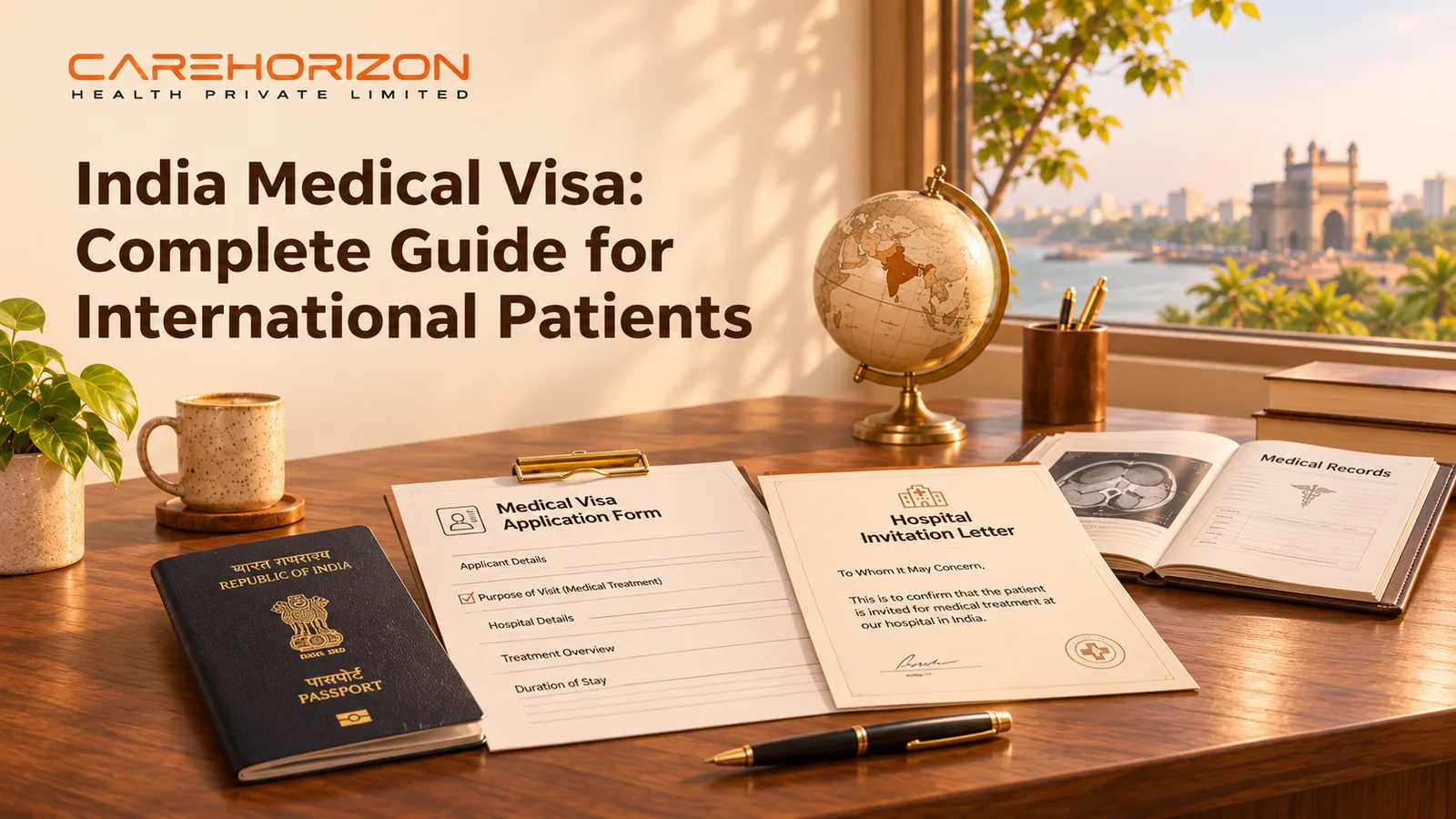
When a doctor suggests treatment in India, families often start with flights and accommodation. But the right order is usually different: first understand the proposed clinical visit, collect an authentic hospital letter, check which visa route applies and then decide when to make travel commitments. The application date needs to fit both the government's permitted window and the hospital's provisional treatment timetable.
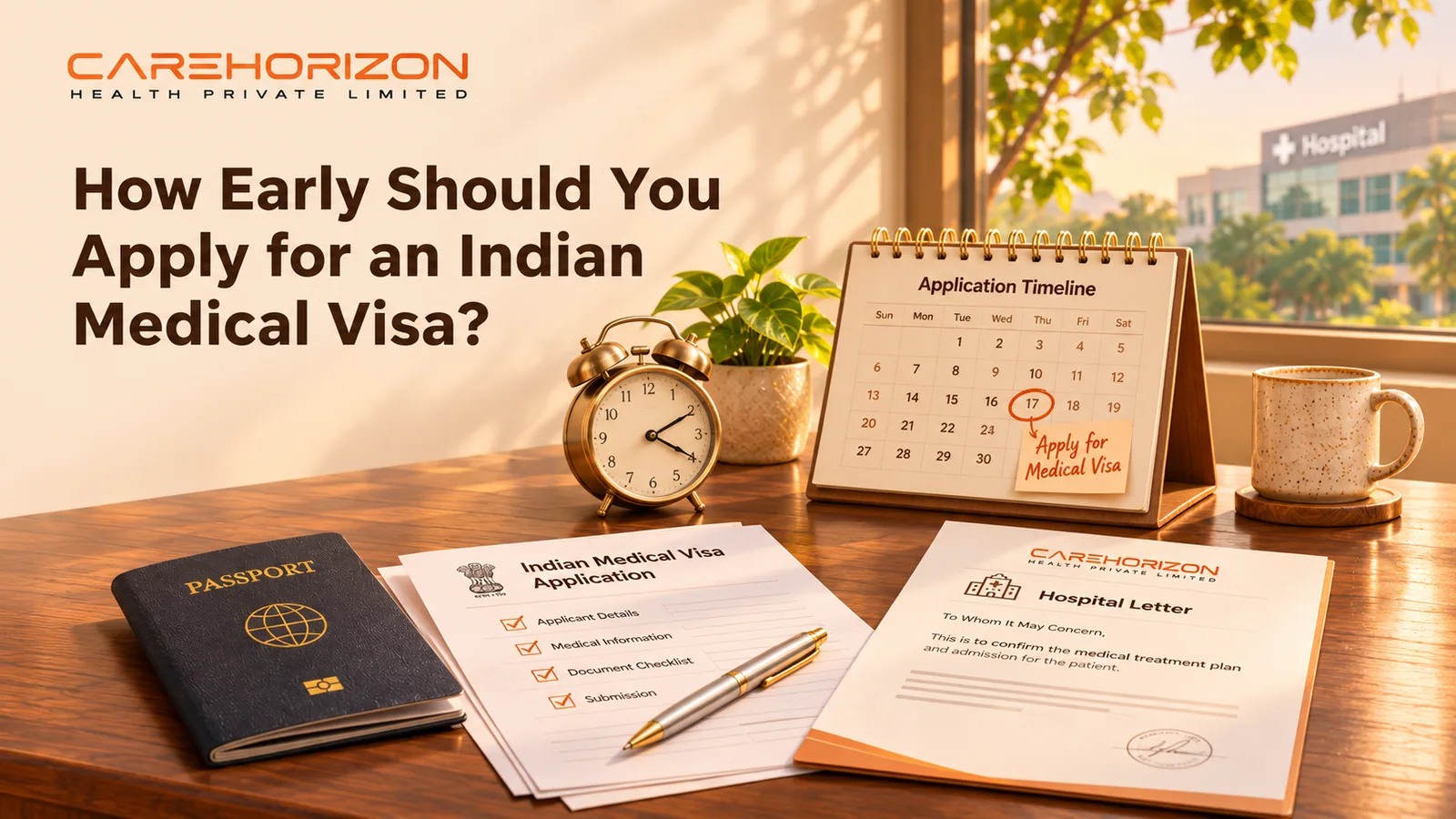
For eligible e-Medical Visa and e-Medical Attendant applicants, India's official e-Visa website states that applications may be submitted within 120 days before intended arrival, but at least four days before arriving. The rule is easy to misread. Four days is the minimum lead time to apply, not a promise that approval will be granted in four days. Regular medical visas have a separate mission-based process, so their practical lead time may be different.
This guide explains when to apply medical visa India, from choosing the correct visa category through obtaining the hospital letter, allowing time for document corrections and deciding when to book travel. It also addresses urgent medical cases, accompanying relatives, changing treatment dates and the difference between a government timeline and a medically appropriate journey.
The short answer: start planning before submitting
Eligible e-Medical applicants can normally submit within the government's 120-day window, provided the intended arrival is at least four days away. Families should begin clinical planning and document preparation earlier when necessary.
The right submission date depends on the hospital's response, individual visa eligibility and available time before the consultation. Do not use the four-day rule as a target date if more time is available.
For further preparation, see medical visa planning guide.
What the 120-day window means
The official e-Visa instructions allow e-Medical and e-Medical Attendant applicants to apply in advance of an intended arrival falling within the next 120 days. This is an advance application window, not a statement that medical visits must last 120 days.
For instance, an applicant considering arrival around a future hospital appointment can use the permitted window once the relevant documents and dates are sufficiently clear. Always calculate against the current government form.
What the four-day minimum means
India's e-Visa guidance states that eligible medical applicants must apply at least four days before arrival. It separately says the applicable e-Visa fee must be paid within the required timeline, and the application is not processed unless the fee requirement is met.
An application submitted at the last permitted moment can still be refused, questioned or delayed. The rule does not promise priority review or clearance before a flight.
Is four days enough in real life?
Not necessarily. A passport scan may need replacement, the hospital may have entered an incorrect passport number or the government may request further information. Practical planning should account for those possibilities.
A family should avoid fixed non-refundable arrangements that depend on the application being approved instantly. A hospital appointment and an immigration decision are independent.
Do not confuse application windows with processing times
A submission window defines when a person is permitted to apply. A processing time describes how long an authority may take to consider an application. A guaranteed result would be a different claim entirely.
The government's four-day minimum for e-Medical applicants is not a guaranteed processing time. Hospitals, travel agents and coordinators cannot convert that requirement into a promise of approval.
Regular medical visa processing is different
The regular visa portal says Indian missions and posts require at least three working days to process an application after receipt, depending on nationality and excluding special cases.
That minimum does not include every day needed for document preparation, booking an appointment, submitting a passport or obtaining further instructions. The relevant mission controls case-specific timing.
Check which route your passport can use
India's e-Visa system is available to eligible nationalities and passport types. Some applicants must follow a regular visa or nationality-specific process.
Check this before calculating a departure date. A family that plans around an electronic application may have to reconsider everything if the patient is not eligible for that route.
For further preparation, see international patients overview.
Why the hospital letter often comes first
An e-Medical Visa application requires an authentic letter on Indian hospital letterhead, including the tentative admission or treatment date. The FAQ also specifies patient name, nationality and passport number.
A hospital may need to review reports and decide which department should see the patient before issuing that letter. The time required for a hospital to respond is separate from visa processing.
For further preparation, see sending medical records to hospitals in India.
When should you request the hospital letter?
Once the patient has a defined medical enquiry, selected a relevant hospital and provided the information required for preliminary review, ask the hospital what it needs to issue genuine visa-support correspondence.
If clinical urgency is high, tell the hospital promptly while continuing appropriate local medical care. Do not invent or backdate a treatment date just to fit a flight.
What if the specialist has not approved surgery?
A patient may travel for consultation and further tests rather than a confirmed procedure. The hospital should accurately describe what it can confirm and any tentative date in its letter.
Visa documentation is not a substitute for a surgeon's final recommendation. Ask the mission for clarification when the medical purpose does not fit a routine scheduled-operation example.
Build time for collecting clinical records
The receiving doctor may request imaging, pathology, recent tests and discharge summaries before deciding whether an international consultation is useful. Some materials are not immediately available.
Ask the originating provider for records early. A well-organised set can reduce avoidable administrative back-and-forth, though a clinician may still require fresh investigations.
For further preparation, see organising medical records for specialist review.
Check the passport before choosing dates
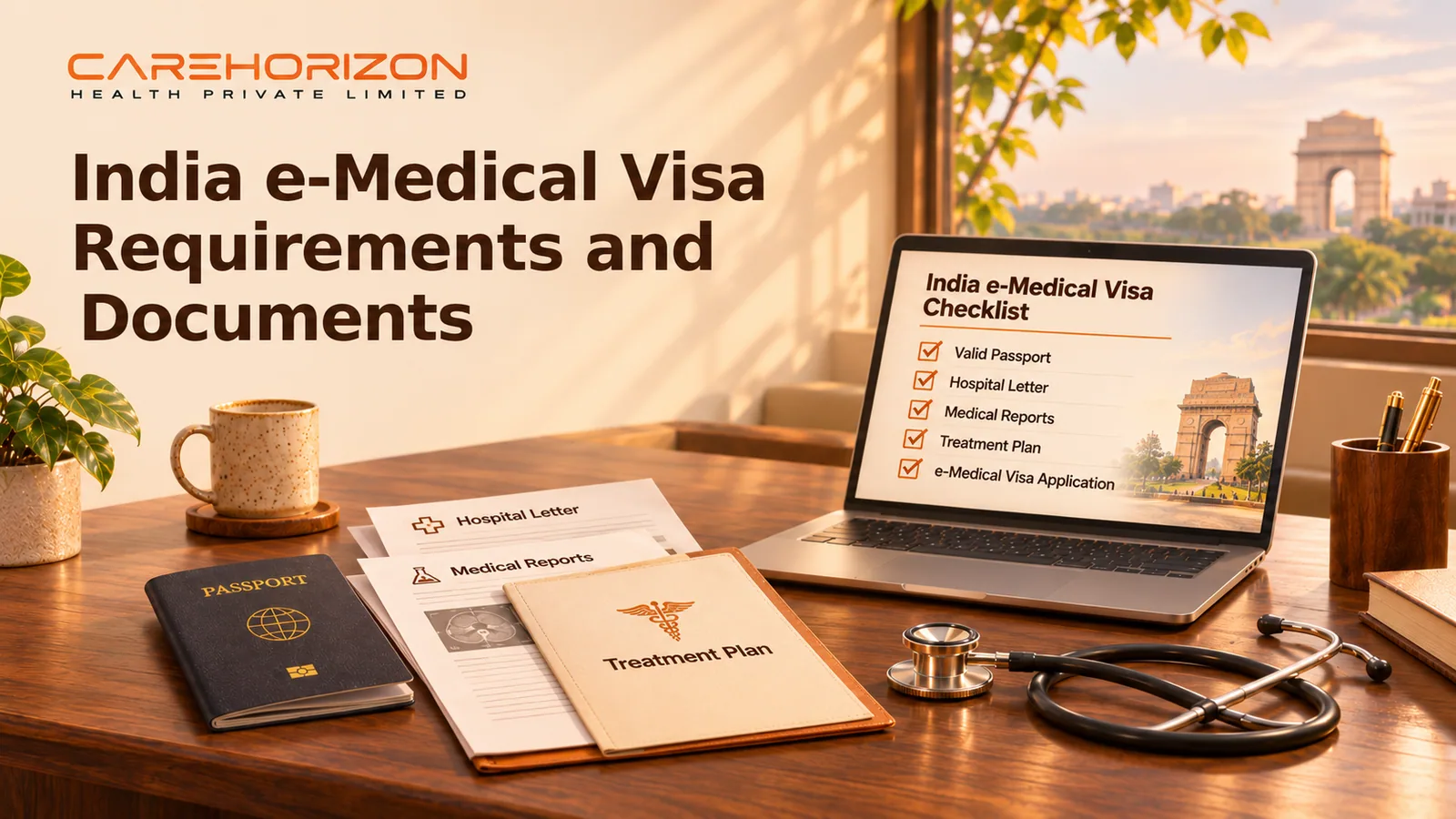
The e-Visa general conditions say a passport should have at least six months of validity when applying and at least two blank pages. Correct identity details are essential for the hospital letter.
If a passport must be renewed, that change can affect both the hospital letter and the visa application. Do not prepare final bookings using an old passport number without checking the consequences.
Prepare the digital photograph and scans
The official e-Visa portal specifies a compliant recent photograph and a readable scan of the passport biographical page. The hospital letter must meet the live document field's requirements.
An incorrect file type, oversized PDF or blurry image can delay submission or lead to rejection. Preparing files before starting the form makes the process less fragile.
Check personal data across all documents
Compare the patient's name, passport number, nationality and intended hospital across the form, passport and hospital letter. Small discrepancies may cause practical problems.
Ask the hospital to reissue an incorrect letter; do not alter a signed PDF yourself. Verify the replacement file before applying.
Use a single authoritative planning calendar
Keep a dated list of the expected arrival, hospital consultation, anticipated investigations, possible admission, accommodation booking and tentative return. Label each item confirmed or provisional.
This calendar helps the family see whether a visa will cover the intended journey and which booking must wait for a clinical decision.
Work backward from a genuine appointment
Start with a hospital appointment actually confirmed or a clinically justified tentative date. Check the patient's travel suitability and the visa window, then select a sensible application date.
Avoid assuming that all appointments, medical tests and operations occur on the day after arrival. The specialist may need to examine the patient before confirming the plan.
For further preparation, see planning treatment in India step by step.
When to buy international flight tickets
A flexible reservation may be useful when treatment dates are tentative, but a paid non-refundable flight adds risk before immigration permission is granted. Airline cancellation policies vary.
The official e-Visa instructions also refer to travellers having return or onward journey tickets. Balance that requirement against the treating clinician's advice about uncertain recovery time.
When to book accommodation
Accommodation depends on the actual hospital campus, accessibility and expected appointments. A patient may need longer local recovery than the originally estimated hospital admission.
Choose cancellable lodging where practical and avoid assuming an indicative surgery package sets the final length of stay.
For further preparation, see where to stay near the hospital.
Allow extra time for a medical attendant
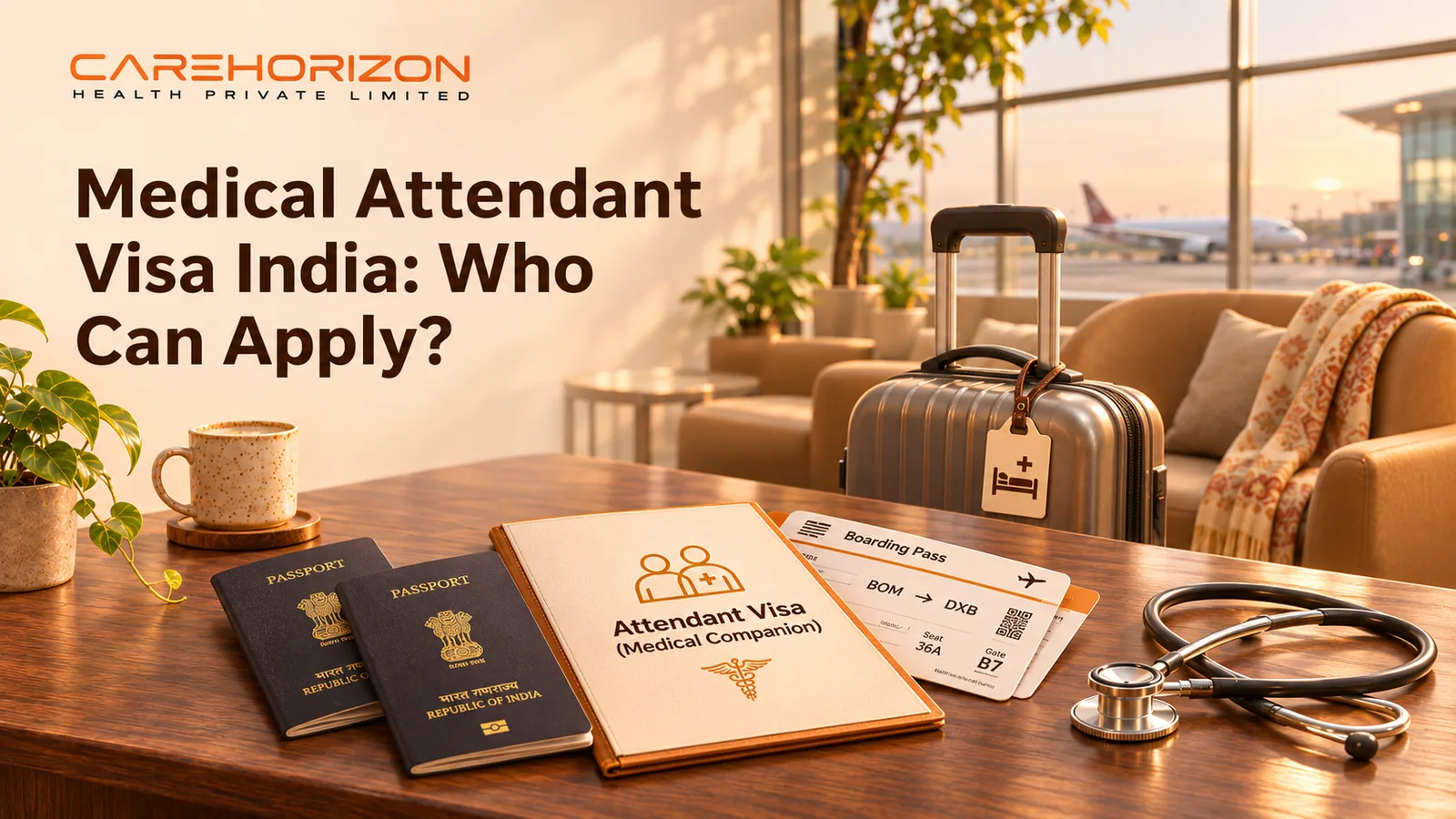
A spouse or other companion has a separate visa application, passport and eligibility assessment. The electronic medical attendant category has its own stated application window.
The official scheme permits a maximum of two e-Medical Attendant Visas against one e-Medical Visa, but it does not guarantee individual approvals. Check every traveller's ETA before departure.
For further preparation, see guide for attendants.
Patient and attendant approvals may arrive separately
The medical patient's approval does not automatically grant entry to companions. Families should verify each person's status independently.
If the attendant is essential for practical support, a delayed companion application may force the family to reconsider flights or accommodation without changing the patient's clinical needs.
What if treatment is urgent?
A genuinely urgent medical problem requires prompt clinical assessment where the patient is located. International visa arrangements should not delay emergency stabilisation or appropriate local treatment.
Tell the receiving hospital the clinical circumstances and use official mission or visa contact channels about possible procedures. Do not assume the e-Visa portal guarantees express approval.
Do emergency visa services exist?
The Indian e-Visa portal warns that the government has made no provision for extra emergency or express e-Visa charges. Be cautious of anyone promising privileged processing for an unofficial payment.
For exceptional circumstances, contact the responsible Indian mission or government service directly rather than purchasing a third-party guarantee.
How nationality affects urgent applications
Different nationalities and passport histories may have distinct visa routes, appointments or checks. This is especially relevant when the applicant cannot use the standard electronic medical category.
Do not generalise a successful emergency application from another country to the patient's situation. Ask the relevant mission for current instructions.
Special note for Bangladesh applicants
Bangladesh nationals should check the designated Indian visa route, current Indian mission instructions and authorised application-centre arrangements before planning medical travel.
Appointment availability and document expectations can change. A general 120-day e-Medical statement is not a substitute for verifying eligibility under a Bangladesh-specific route.
What happens if the hospital changes the appointment?
An appointment may move because of additional testing, doctor availability or changed clinical findings. Ask the hospital for updated correspondence if the change matters to the visa application.
Check the submitted application or approved visa before moving the flight. A hospital reschedule cannot automatically change immigration validity.
What if the recommended treatment changes?
A second opinion may suggest a different procedure, hospital or city. These changes can affect medical letters, insurance authorisation and travel dates.
Ask the qualified treating clinician to explain the new plan and seek official immigration clarification if the original visa documentation names another hospital.
For further preparation, see getting a second medical opinion.
Check the issued visa's actual dates
The official e-Visa website has shown inconsistent descriptions of medical category validity between its current category table and an older FAQ. Applicants should not infer one fixed duration.
Verify the exact subtype, granted Electronic Travel Authorization, permitted entries and immigration endorsements. The permitted stay is not necessarily the period the hospital expects the patient to remain.
Travel permission versus fitness to fly
Approval to enter India is not a medical assessment. A patient may have a valid visa yet be unsuitable for an ordinary flight because of clinical needs.
The treating doctor and airline must separately assess any required clearance, medical equipment, mobility assistance or escort.
For further preparation, see fitness-to-fly guide.
Planning around medical recovery
Return flights should reflect the treating team's advice about recovery and travel suitability. Some patients need follow-up appointments after discharge.
Avoid booking a rigid departure based solely on the original estimate. A hospital discharge date does not automatically mean the patient is fit to fly.
For further preparation, see recovery and follow-up guide.
What if recovery takes longer than expected?
An extension of treatment does not automatically extend visa permission. If the patient may remain beyond authorised stay, seek the responsible FRRO or immigration guidance early.
Keep hospital medical documents available for any official inquiry, but remember that only government authorities decide extensions or other permissions.
Can the application be corrected after submission?
The applicant may receive official instructions for additional material or corrections. Check the application status through the government portal and avoid resubmitting contradictory forms without guidance.
Not every mistake can be fixed instantly. This is another reason not to rely on a last-minute minimum-date application.
Check the ETA before going to the airport
The e-Visa portal tells applicants to confirm that the ETA status is shown as granted before travel and to carry a copy. A submission acknowledgement or payment confirmation is not approval.
Also compare name and passport number on the authorisation with the passport, and check the actual category and entry conditions.
Verify the intended airport or border
Electronic visa holders must use the permitted entry points listed by the government for their category. A convenient overland border may not be approved for an e-Visa.
Confirm the route before buying tickets, particularly when the hospital is near an international land boundary.
For further preparation, see arriving in India for treatment.
The e-Arrival Card is a separate step
India's official visa homepage describes an e-Arrival Card process within 72 hours before arrival for applicable travellers. This card does not replace the visa.
Check the latest arrival instructions near the travel date, after confirming immigration permission and the clinical itinerary.
When not to commit to a surgery package
A preliminary hospital estimate may precede examination, additional tests or insurer approval. Paying early cannot make a procedure clinically appropriate or guarantee admission.
Request a written estimate with exclusions and refund conditions. Keep financial decisions separate from the visa application and clinical consent process.
For further preparation, see understanding hospital treatment estimates.
Protect against misleading visa agents
The official Indian portal is the correct starting point for visa applications and fee information. Third parties may imitate government websites or promise approvals they do not control.
Verify website domains, keep application IDs and payment receipts, and avoid sharing passwords or one-time codes with untrusted intermediaries.
A model planning timeline, not a government deadline
Early phase: clarify the diagnosis, identify an appropriate hospital and gather relevant records. Preparation phase: obtain the genuine hospital letter, check passport and photograph requirements and identify the correct visa route.
Application phase: submit within the official window with enough margin for corrections. Travel phase: act only on actual approvals and clinical readiness. The time required for each phase varies by case.
Checklist four months before proposed arrival
If the journey is still tentative, review nationality eligibility, passport expiry, likely treatment destination and whether a specialist needs remote records before providing dates.
At the beginning of the 120-day e-Medical window, an eligible applicant may be able to apply if the required hospital documents are ready. There is no advantage in entering invented details just to submit on the earliest date.
Checklist several weeks before proposed arrival
Confirm the hospital letter, appointment context, patient identification and the correct application route. Check whether attendants have separate eligibility and documents.
Where possible, allow a comfortable margin for uploading documents, official processing and revised plans. A period of several weeks is a practical planning preference, not an official mandatory waiting time.
For further preparation, see documents to bring for treatment in India.
Checklist within the final week
Check the official application status, ETA, passport details, airline conditions, appointment and arrival logistics. If approval is still pending, do not presume it will arrive before travel.
A last-minute change requires direct communication with the hospital, airline and immigration authority as appropriate. Avoid relying on an intermediary's unverified promise.
Scenario: Planned consultation in India
A stable patient receives a preliminary records review and an authentic hospital letter with a tentative appointment. The family checks visa eligibility and applies within the official window, retaining flexible accommodation.
The specialist may revise treatment after examination. This hypothetical example is not a guarantee of visa approval or a fixed recovery schedule.
Scenario: Surgery date is postponed
An overseas patient has begun visa preparation, but a new investigation alters the proposed surgical date. The family requests updated medical correspondence and checks the effect on the visa and flight.
The lesson is to keep clinical decisions and immigration permission aligned without assuming one automatically updates the other.
Scenario: A companion's approval is delayed
A patient receives an individual visa approval while a proposed attendant's status remains pending. The family reviews the support needed on arrival and does not treat the pending application as granted.
The case illustrates why separate applications should be tracked separately and why family travel should not depend on guaranteed simultaneous decisions.
How Carehorizon Health supports the journey
Carehorizon Health Private Limited coordinates practical arrangements around clinical care. Depending on the enquiry, that may include organising medical records, communicating hospital letter requirements and aligning appointment, travel and accommodation enquiries.
Hospitals and clinicians decide care; Indian authorities decide visas; airlines decide acceptance; insurers decide coverage. Carehorizon does not promise a processing timeline, medical admission, visa approval or treatment outcome.
For further preparation, see how Carehorizon works.
Frequently Asked Questions
How early can I apply for an Indian e-Medical Visa?
The official e-Visa portal states that eligible applicants can apply within 120 days before intended arrival, provided they apply at least four days before arrival.
Can I apply only four days before flying?
The published rule gives a minimum application lead time, not a guarantee that approval will arrive in four days. Apply with more margin where possible.
How long does a regular Indian medical visa take?
The government regular visa portal describes a minimum of three working days after a mission receives the application, depending on nationality and excluding special cases. Additional preparation and appointments can take longer.
Should I obtain a hospital letter before applying?
The e-Medical application requires a genuine Indian hospital letter with the tentative date and required patient information. Ask for it before starting the application.
Can I apply without a confirmed surgery date?
The official hospital-letter guidance uses a tentative admission or treatment date. Ask the hospital and relevant mission how to document a genuine preliminary consultation truthfully.
Do attendants follow the same timing window?
The official e-Visa instructions give the e-Medical Attendant category the same minimum four-day lead time and 120-day advance application window, subject to individual eligibility.
Should I buy flights before my visa is approved?
Avoid inflexible non-refundable commitments when possible. Check official entry permission and clinical travel suitability rather than assuming a submitted application will be granted.
Can an urgent medical case obtain guaranteed express approval?
No guaranteed government express e-Visa process should be assumed. The portal warns against special emergency or express fee claims. Consult the competent mission about individual urgent circumstances.
What if my treatment date changes after applying?
Ask the hospital for updated documents and check whether the submitted application, issued visa and bookings are still appropriate. Do not assume medical scheduling changes the immigration permission.
Can Carehorizon guarantee my visa will arrive in time?
No. Carehorizon can assist with document and travel coordination, but Indian authorities decide visa processing and approval.
Official Government References
- Government of India — Official e-Visa Application, 120-Day Window and Four-Day Minimum: https://indianvisaonline.gov.in/evisa/
- Government of India — Detailed e-Visa FAQ, Application Timing and Hospital Letter: https://indianvisaonline.gov.in/evisa/tvoa.html
- Government of India — Regular Visa Process and Document Submission: https://indianvisaonline.gov.in/visa/
- Government of India — Regular Visa Minimum Processing Time: https://indianvisaonline.gov.in/visa/visa-processing.html
- Government of India — e-FRRO Services: https://indianfrro.gov.in/
- Government of India — Bangladesh Visa Application Portal: https://indianvisa-bangladesh.nic.in/visa/
- Government of India — Indian Visa Online and e-Arrival Guidance: https://indianvisaonline.gov.in/
For planned medical travel coordination: Carehorizon Health | WhatsApp/Call +91 6292041222 | care@carehorizonhealth.com | https://carehorizonhealth.com/enquiry/
Immigration, clinical, financial and publication disclaimer: This article is general information verified against official sources on 12 November 2026, not a guarantee of visa processing, legal advice, medical travel clearance, insurer approval or hospital admission. The 120-day and four-day timing statements concern eligible e-Medical/e-Medical Attendant applications and are not universal processing promises. Regular visa requirements depend on mission and nationality. Visa validity wording on official e-Visa pages may conflict, so applicants must check their particular permission. The treating clinicians determine clinical travel suitability and hospitals determine admission. Internal Carehorizon links come from the supplied inventory and require live verification before publication.
Carehorizon Health coordinates medical travel, patient transfers and related arrangements. The information here is educational; it does not diagnose, prescribe, guarantee an outcome or replace advice from your treating medical team. Service availability, costs and travel requirements are confirmed case by case.