This article provides general information to support better planning. Individual medical decisions and fitness for travel require assessment by qualified treating professionals.
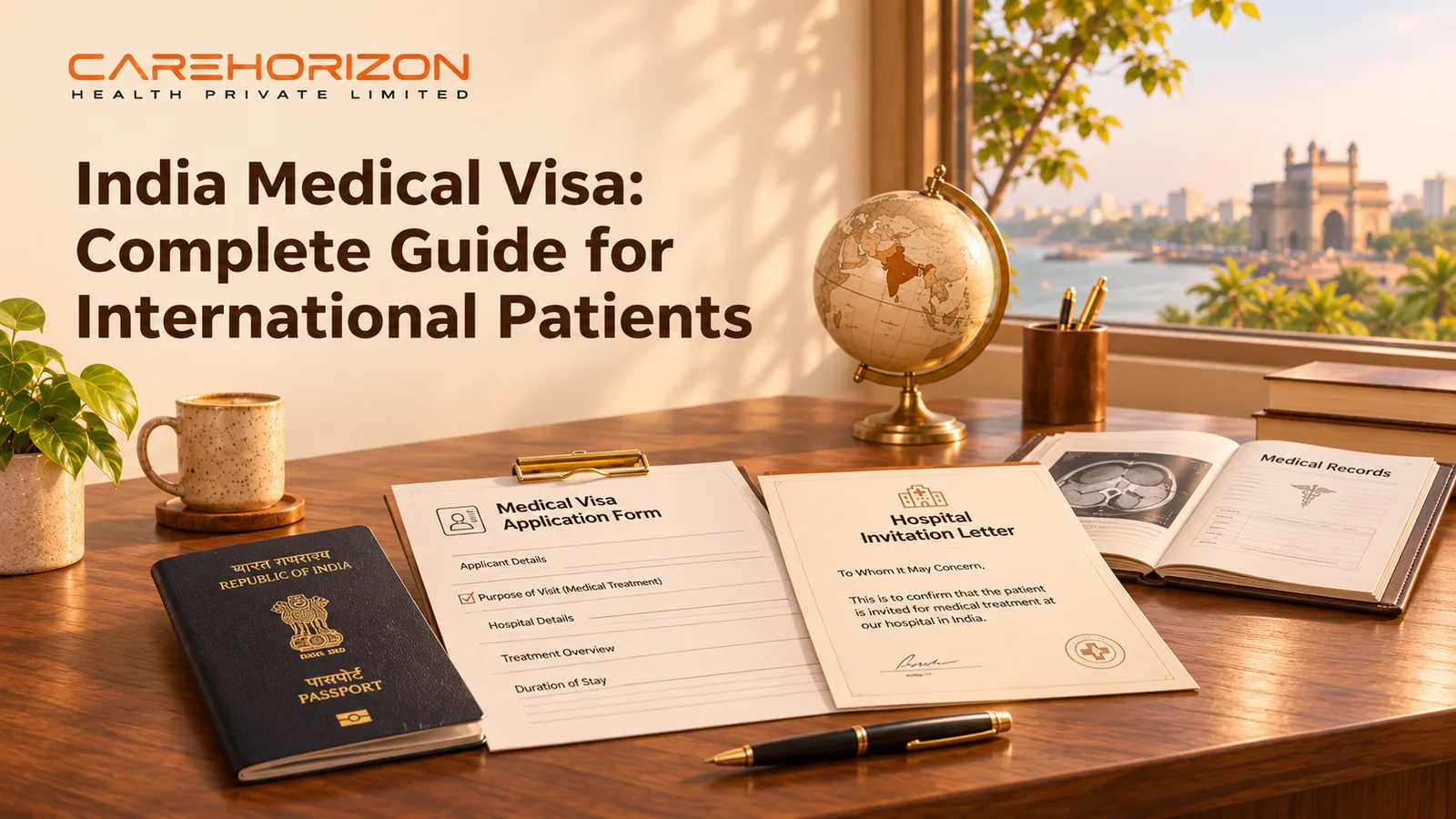
A patient seeking treatment in India may have already sent reports to a specialist, discussed a possible procedure and received an estimated hospital bill. Before submitting a medical visa application, however, the family may need another document: an invitation or support letter issued by the Indian hospital. This letter connects the proposed medical visit to an identifiable healthcare institution and patient.
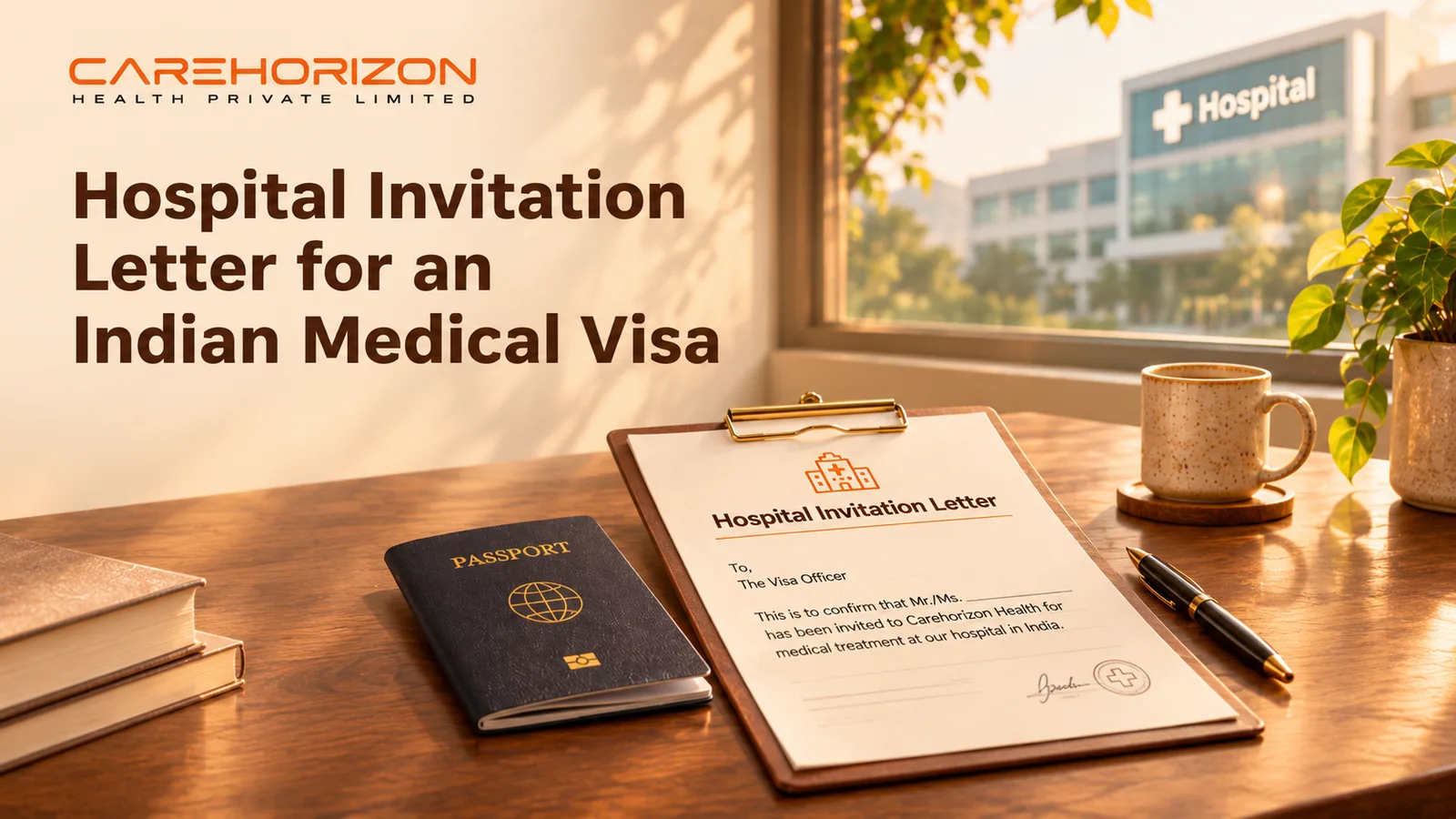
The official Indian e-Visa instructions specifically require a letter from the concerned hospital in India on its letterhead for an e-Medical Visa application. The government's FAQ says the letter should identify the patient's name, nationality, passport number and tentative admission or treatment date. A hospital invitation letter is therefore more than a generic email that says the patient is welcome to visit.
This guide explains the medical visa invitation letter India applicants commonly need: what the verified government instructions specify, what additional information can make it easier to check, who should issue it, how to request it and how to correct mistakes. It also explains differences between the hospital letter, written treatment plan, appointment confirmation and surgery estimate, so families can prepare the correct documents without inventing clinical facts.
What Is a Hospital Invitation Letter?
A hospital invitation letter is formal correspondence from an Indian healthcare institution supporting the patient's stated purpose of a medical visit. Depending on the visa route, it may also be described as a medical visa support letter or treatment invitation.
It is not the visa itself. The Indian immigration authority decides whether to grant entry permission, and the hospital separately decides whether it can assess or admit the patient.
Why the Letter Matters for an e-Medical Visa
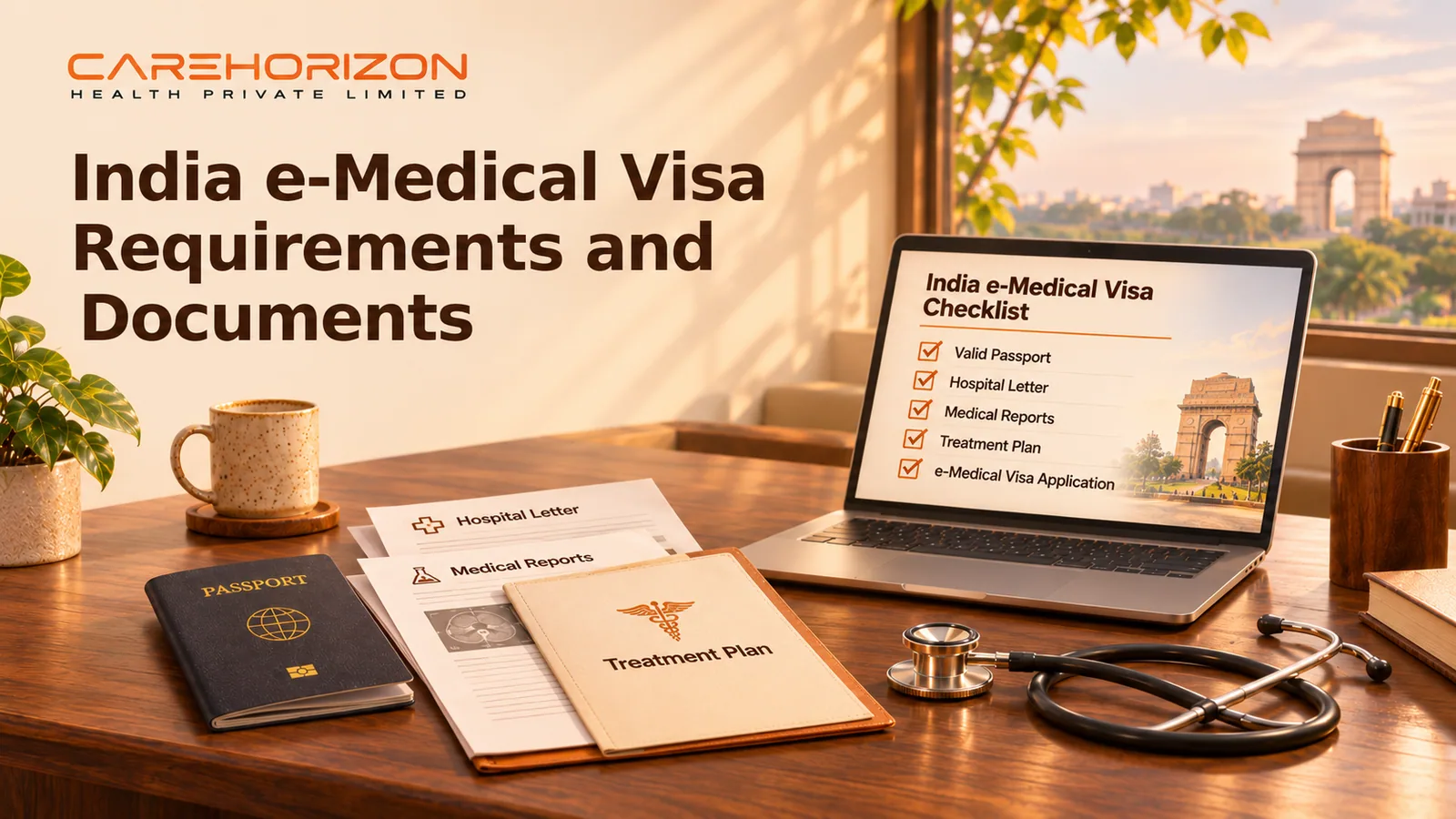
The Indian government's e-Visa document checklist lists a letter from the concerned hospital in India on its letterhead, including a date or tentative date suggested for admission or treatment.
A valid clinical enquiry and a visa application are different processes. The hospital's letter supplies evidence for the proposed medical purpose but does not compel immigration approval or guarantee a specific procedure.
For related preparation, see medical visa information.
The Four Key Details in the Official FAQ
The official e-Visa FAQ identifies the patient's name, nationality, passport number and tentative admission or treatment date. The checklist also states that the document must be on the Indian hospital's letterhead.
These are the core items patients should compare against their passport and appointment information. The live application and applicable Indian mission may require additional details for particular applicants.
Hospital Identity and Letterhead
Ask that the correspondence be issued on the concerned hospital's authentic letterhead, accurately naming the facility. A verifiable address and official contact route can help the applicant check where the care is proposed.
The precise branding layout is not a clinical credential. Verify the facility through an independently located official website or telephone number rather than assuming an attractive seal proves authenticity.
The Patient's Name Must Match
Check the name as it appears in the passport and the information required by the visa form. Even a small inconsistency can require clarification, especially when a surname, middle name or ordering convention differs.
Do not edit an issued letter yourself. Ask the hospital to reissue corrected correspondence if necessary and retain the final version for submission.
Nationality and Passport Number
The government's FAQ specifically mentions nationality and passport number. Both should be copied carefully from the passport that will be used for the application.
Transposed digits, a previous passport number or an incorrect nationality can undermine the document's reliability. Compare it character by character before submitting.
The Tentative Admission or Treatment Date
A hospital may suggest a provisional date for consultation, assessment or treatment. The official wording allows the document to refer to a tentative admission or treatment date.
Tentative does not mean surgery is guaranteed. If the clinical plan still requires tests or in-person assessment, the hospital should describe the appointment truthfully instead of confirming an operation it has not approved.
Must the Hospital Promise Surgery?
No universal e-Medical instruction says every letter must guarantee a surgical procedure. Clinical decisions can remain conditional on examination and further investigation.
Do not pressure the hospital to provide a false promise of surgery solely to strengthen a visa application. Ask the institution and relevant Indian mission what is appropriate to state for the actual clinical purpose.
Which Hospital Should Issue the Letter?
The letter should come from the concerned hospital where the medical visit is being proposed, through its authorised international patient or administrative channel.
A third-party medical facilitator may organise the request but should not replace the hospital as issuer or generate a letter that appears to have been signed by its clinicians.
Can a Doctor Issue a Personal Invitation?
A physician's opinion or referral may support clinical planning, but a personal note is not necessarily the hospital-letterhead document described by India's e-Medical checklist.
Ask the intended hospital to confirm whether a clinician-authored letter is issued on institutional letterhead and whether it satisfies its documented application process.
Do You Need an Appointment Before Requesting It?
Hospitals may differ in when they issue visa-support correspondence. Some may first review records or confirm a consultation request; others may ask for registration or additional information.
An enquiry acknowledgement should not be mistaken for a confirmed appointment. Ask what steps must occur before the hospital can issue its authentic letter.
What to Send the Hospital First
Provide the patient's passport identity details through a secure approved channel, a concise explanation of the medical question, relevant investigations and the desired appointment period if known.
The hospital may need records sufficient to identify a suitable department. Supplying those records does not authorise an external coordinator to interpret medical results or determine treatment.
For related preparation, see sending medical records to hospitals in India.
Organising Clinical Reports for Review
A useful records package may contain a referring clinician's summary, diagnosis or working diagnosis, imaging, pathology when relevant, important lab results, previous treatment notes and current medications.
Keep the reports dated and legible. Ask whether the receiving specialist needs original imaging files rather than only a written scan report.
For related preparation, see organising medical records for specialist review.
Should the Letter Include the Diagnosis?
The official e-Medical FAQ's core document description does not expressly identify a detailed diagnosis as a universal required field. An individual hospital or consular route may request appropriate medical context.
Where clinical information is included, it should be truthful, proportionate and authorised. Avoid unnecessary disclosure of sensitive information in documents that will pass through multiple administrative systems.
Should It Include a Treatment Estimate?
A price quotation is not listed as the substitute for the required hospital letter. If a hospital supplies a cost estimate, the clinical and financial documents should be clearly distinguished.
The estimate may change after examination and additional tests. Patients should ask for a separate dated quotation with inclusions, exclusions and payment terms.
For related preparation, see understanding hospital treatment estimates.
Hospital Letter Versus Written Treatment Plan
The invitation or support letter serves an administrative immigration purpose. A written treatment plan should come from a qualified clinician and explain proposed care, uncertainty, investigations and follow-up.
An administrative invitation does not replace informed consent, medical advice or clinical clearance. The two documents should be consistent about the proposed facility and purpose.
For related preparation, see planning treatment in India.
Hospital Letter Versus Appointment Confirmation
An appointment confirmation establishes that a consultation or other booking has been arranged. It may not include the name, nationality, passport number or tentative treatment date required in the visa-support letter.
Some hospitals combine relevant details into one institutional document. Ask whether the issued correspondence is intended for visa submission rather than assuming every appointment email is sufficient.
Hospital Letter Versus Medical Referral
A referral typically explains why another clinician should assess the patient and what records are relevant. The hospital letter identifies the proposed institution and medical visit for immigration purposes.
The referring doctor and receiving hospital have distinct roles. A family should keep both when useful without changing or merging clinical findings.
For related preparation, see getting a second opinion in another city.
Do Medical Attendants Need the Same Letter?
The standard e-Medical Attendant upload checklist lists the attendant's passport biographical page, whereas the e-Medical patient's checklist expressly lists a hospital letter.
However, the live attendant form or a regular visa route may request information that links the companion to the patient. Check the applicable official process rather than asserting the hospital letter is always separately mandatory or never relevant.
For related preparation, see guide for attendants.
Requesting a Letter for a Patient and Companion
When requesting hospital correspondence, identify the principal patient clearly and ask the hospital which information it will provide for accompanying attendants if required.
Each traveller needs their own lawful visa route and passport. A hospital's mention of an attendant does not automatically confer immigration eligibility.
Regular Medical Visa Requirements May Differ
For a regular visa issued through an Indian mission, the applicable consular instructions may include further supporting documents and different upload specifications.
Do not assume the e-Medical checklist covers every nationality. Use the official route appropriate to the applicant, especially where government portals provide country-specific procedures.
For related preparation, see international patients overview.
Special Rules for Bangladesh Applicants
Bangladesh nationals should follow the designated Indian visa application process and current Indian mission or authorised application centre guidance rather than assuming the standard electronic route applies.
Appointment availability, hospital-specific documentation and permitted border routes can change. Check official notices before making non-refundable travel arrangements.
Special Rules for Afghanistan Applicants
India's nationality-specific Afghanistan visa portal expressly refers to a system-generated medical invitation letter from an Indian hospital in its medical visa documents.
That wording should not be presented as a universal requirement for every applicant. It illustrates why the correct nationality-specific portal is important.
How to Verify an Invitation Letter
Confirm the hospital identity independently, check the intended campus, compare the patient's passport details and examine whether the proposed date accurately reflects the current discussion.
If the letter came through a third party, contact the hospital's published international patient or administrative office to verify issuance. Do not rely solely on a stamp image or message thread.
For related preparation, see questions to ask before choosing a hospital.
Beware of Fake Hospital Invitations
Fraudulent documents can imitate letterheads or contact details. A facilitator might claim to have a guaranteed hospital partnership, visa appointment or admission despite no official confirmation.
Verify hospital correspondence directly, avoid paying personal bank accounts without confirmation and preserve genuine communications. Carehorizon does not claim unverified hospital affiliations.
How to Ask for a Correction
If the patient name, nationality, passport number, hospital location or tentative date is wrong, reply to the issuing hospital with the accurate information and request a new authorised letter.
Do not change PDF text, move a signature or attach an altered page. Keep the replacement file clearly identified so an earlier incorrect version is not uploaded by mistake.
What if the Patient Renews Their Passport?
A renewed passport may change the number used in the letter. Compare the updated identity with the visa application requirements and seek a replacement hospital letter if necessary.
If a visa has already been issued on an old passport, read the official Indian rules for that exact situation and carry required documents. Do not infer that every mismatch can be ignored.
What if the Treatment Date Changes?
Medical assessment, new investigations or hospital scheduling can alter a provisional visit date. Ask whether an updated invitation is needed and check the current application status.
The hospital can change its proposed clinical timetable, but it cannot automatically amend a government visa's validity or permitted stay.
What if the Hospital Changes?
A second opinion might lead a patient to consider another facility. Where a visa application or permission references a specific receiving institution, changing hospitals can have immigration implications.
Seek advice from the relevant Indian mission or FRRO before assuming that the existing documentation covers a new hospital. A clinical recommendation is not itself immigration approval.
What if More Than One Hospital Is Involved?
Multi-city care may involve one hospital providing the first assessment and another providing a procedure. Ask each institution to clarify its role and which one is the relevant receiving hospital for immigration correspondence.
Avoid attaching inconsistent invitation letters without explaining the proposed itinerary. Immigration documentation should follow official instructions and genuine clinical arrangements.
For related preparation, see hospital transfer documents.
What if the Hospital Cannot Issue the Letter Yet?
A hospital may need medical records, a clinician's review or administrative registration before issuing correspondence. The family should ask which requirement is outstanding and what the current status means.
Do not fill the gap with a self-created invitation or an unauthorised agent's letterhead. If the medical case is urgent, the patient should seek appropriate clinical care while the documentation issue is resolved.
Document Language and Format
India's e-Visa portal says invitation letters and other uploaded supporting documents should be in English, and that noncompliant or unclear documents can lead to rejection.
The official instructions specify PDF document uploads subject to the current form's size rules. Recheck live requirements; requirements for regular visas may differ.
PDF Scan Quality Matters
A letter can have the correct words yet be rejected or questioned if the scan is too blurry, cut off or excessively compressed. Check the letterhead, patient details, date and signature or issuing information for legibility.
Use the file provided by the hospital where possible and avoid distorting or reconstructing its contents. Confirm the correct file was attached to the correct field.
Do Not Use an Outdated Letter Without Checking
An earlier invitation may relate to a cancelled visit, different passport or changed hospital location. Ask whether it remains valid for the current application.
There is no basis to invent a universal hospital-letter expiry period. Follow the actual visa instructions and the issuing hospital's confirmation.
The Visa Application Is a Separate Decision
A genuine hospital letter is a supporting document, not evidence that the government has approved the person's visa. Application assessment and entry remain within the immigration authorities' powers.
Check the official application status and the issued Electronic Travel Authorization or other visa, including identity, category and entry conditions, before finalising travel.
The Letter Does Not Establish Fitness to Fly
A patient may have a hospital invitation but still be medically unsuitable for ordinary commercial air travel. The treating clinician and the operating carrier determine the relevant medical clearance and assistance requirements.
A medical travel coordinator cannot certify fitness to fly or arrange medically inappropriate travel simply because a visa application is underway.
For related preparation, see fitness-to-fly guidance.
Align the Hospital Letter With the Travel Itinerary
Use the authentic letter to confirm the intended city, hospital campus and proposed clinical visit. Check airport arrival, accommodation location and transport against that address.
Avoid assuming the hospital's tentative date is a fixed surgery day. Keep flexible bookings when clinical decisions remain provisional.
For related preparation, see arriving in India for treatment.
Protect Personal Information
Passport copies and health records are sensitive. Send them through the hospital's approved communication channels and share them only with people authorised to coordinate the application.
Avoid posting passport images in public groups or sending identifying documents to an unknown visa agent. Keep track of which version of the letter was shared and with whom.
For related preparation, see continuing care with a doctor at home.
Hospital Invitation Letter Request Checklist
Before contacting the hospital: verify its identity, assemble relevant records, identify the proposed specialist and make sure the patient's current passport details are accurate.
In the request: ask for the visa-support letter on official letterhead, mention the planned clinical assessment or treatment and confirm any tentative date. Ask which internal process the hospital uses for approval and issue.
Final Letter Verification Checklist
Confirm hospital identity and letterhead; patient's full name; nationality; passport number; tentative admission or treatment date; accurate institutional information; and consistency with the proposed clinical visit.
Ensure the document is authentic, readable, in the language and file type required by the applicable visa portal, and obtained through a verifiable official channel.
Before-Submission Checklist
Check nationality-specific eligibility, the exact visa category, current upload instructions and official payment site. Compare the letter against the passport and application form.
For companions, check their individual visa documents separately. A family member's relationship to the patient does not replace their own visa application.
After Submission or Approval
Monitor the official status, preserve the application reference and review the issued visa carefully. If a date or hospital changes, ask whether the government requires updated documentation.
Keep a copy of the genuine hospital correspondence available for travel, while understanding that border permission and clinical admission remain separate.
Illustrative Case: A Passport Typo
A patient's invitation letter contains one incorrect digit in the passport number. The family checks the document before applying and asks the hospital to issue a corrected version.
This fictional example illustrates why correcting an authentic source document is preferable to modifying a PDF after issue.
Illustrative Case: Consultation Before Surgery
A patient receives a hospital letter with a tentative assessment date but no guaranteed operation. After examining the patient, the clinician will decide whether surgery is appropriate.
The family avoids treating a tentative clinical date as a confirmed procedure or fixed hospital invoice. The example is illustrative, not a statement about a specific provider.
Illustrative Case: Hospital Changes After a Second Opinion
An international patient originally considers one hospital but later receives a recommendation to consult another. The family asks the new institution about appropriate documentation and seeks official visa guidance.
The example highlights the difference between a medical referral and legal permission to change the hospital associated with a visa.
How Carehorizon Health Supports the Process
Carehorizon Health Private Limited coordinates practical arrangements around clinical care. Depending on the enquiry, this may include helping families organise medical records, request authentic hospital correspondence and align appointments and travel.
Hospitals issue their own letters and determine admission; treating clinicians make medical decisions; immigration authorities decide visas and entry. Carehorizon does not fabricate letters, guarantee hospital relationships or promise visa approval.
For related preparation, see how Carehorizon works.
Illustrative Hospital Letter Content Checklist
This is a patient-side review checklist, not a document that patients should issue themselves and not a government-mandated letter template. Only the actual hospital can provide its authentic invitation.
Hospital details: authentic institutional letterhead, hospital name and identifiable facility or campus; authorised correspondence date and appropriate issuing contact.
Patient details: passport-matching full name, nationality and passport number, with any relevant identification the hospital uses.
Visit details: a truthful description of the intended medical assessment or treatment and the date or tentative admission/treatment date suggested by the hospital.
Verification: check that the information matches the current passport and medical arrangements; ask the hospital to correct errors in a new official version.
Documents kept separately: specialist opinion or treatment plan, itemised hospital estimate, passport biographical-page scan, photograph and companion visa application documents.
Frequently Asked Questions
Is a hospital invitation letter required for an Indian e-Medical Visa?
Yes. The official e-Medical document checklist requires a letter from the concerned Indian hospital on its letterhead with the date or tentative date suggested for admission or treatment.
What details should the hospital letter include?
The official FAQ identifies the patient's name, nationality, passport number and tentative admission or treatment date. The letter must come from the concerned hospital on its letterhead.
Can a medical travel agency issue the hospital invitation letter?
An agency may help request authentic correspondence but should not issue a letter pretending to be the hospital. Verify the document with the receiving institution.
Does the invitation letter guarantee surgery?
No. It supports the visa application; surgery may depend on clinical examination, investigations, consent and hospital decisions.
Can a hospital issue the letter before treatment is confirmed?
It may provide truthful tentative information based on its assessment and procedures. Check with the hospital and relevant visa authority about what is acceptable for the clinical purpose.
Is an appointment confirmation the same as a visa invitation letter?
Not necessarily. A routine booking message may omit patient identification or the information required by the official e-Medical checklist.
Does the hospital letter need to state treatment costs?
The general e-Medical visa document description does not list a price as a universal required field. A hospital estimate is a separate financial document.
Do medical attendants need a separate invitation?
The general e-Medical Attendant upload list is different from the patient's. Check the live attendant form and nationality-specific route for any linked patient documents.
What if the invitation letter contains a passport mistake?
Ask the issuing hospital to reissue an accurate letter. Do not alter an authenticated document yourself.
Will a genuine hospital letter guarantee Indian visa approval?
No. The government evaluates each application and determines the entry permission; a genuine hospital document is only one part of the process.
Official Sources and Further Reading
- Government of India — e-Visa General Instructions and e-Medical Document Checklist: https://indianvisaonline.gov.in/evisa/
- Government of India — e-Visa FAQ, Question 20 on Hospital Letters: https://indianvisaonline.gov.in/evisa/tvoa.html
- Government of India — Regular Visa Application: https://indianvisaonline.gov.in/visa/
- Government of India — Regular Visa Document Upload Requirements: https://indianvisaonline.gov.in/visa/DocumentUpload
- Government of India — Afghanistan-Specific Medical Visa Information: https://indianvisaonline.gov.in/avisa/index.html
- Government of India — Bangladesh-Specific Visa Application Route: https://indianvisa-bangladesh.nic.in/visa/
- Government of India — e-FRRO: https://indianfrro.gov.in/
For planned international patient coordination, contact Carehorizon Health: WhatsApp/Call +91 6292041222 | care@carehorizonhealth.com | https://carehorizonhealth.com/enquiry/
Medical, immigration and publication disclaimer: This article provides general administrative information reviewed on 12 November 2026. It is not legal advice, visa issuance, a clinical diagnosis, a guarantee of hospital admission or treatment, a binding treatment estimate or fitness-to-travel certification. The applicable government application process, nationality-specific rules and live document specifications control. Only the hospital may issue authentic hospital correspondence; clinicians decide medical care and immigration authorities decide visa applications. Internal Carehorizon links are drawn from the supplied site inventory and require live-page verification before publication.
Carehorizon Health coordinates medical travel, patient transfers and related arrangements. The information here is educational; it does not diagnose, prescribe, guarantee an outcome or replace advice from your treating medical team. Service availability, costs and travel requirements are confirmed case by case.