This article provides general information to support better planning. Individual medical decisions and fitness for travel require assessment by qualified treating professionals.
An international patient can reach the airport with a confirmed hospital appointment yet still be missing something important: the correct visa document, a legible scan, the original imaging needed for a specialist review, or a prescription explaining medications in a carry-on bag. Preparing a small, organised set of records before leaving home makes it easier to move from immigration to the hospital without relying on scattered messages and screenshots.
The necessary paperwork falls into four groups. Immigration and identity documents establish the right to travel. Clinical records explain the patient's condition. Hospital and financial papers clarify what has been arranged and what remains provisional. Finally, return-home records are gathered during treatment in India so the patient's own doctors can continue care. Not every item in this guide is a mandatory immigration requirement; many are practical documents recommended for medical continuity.
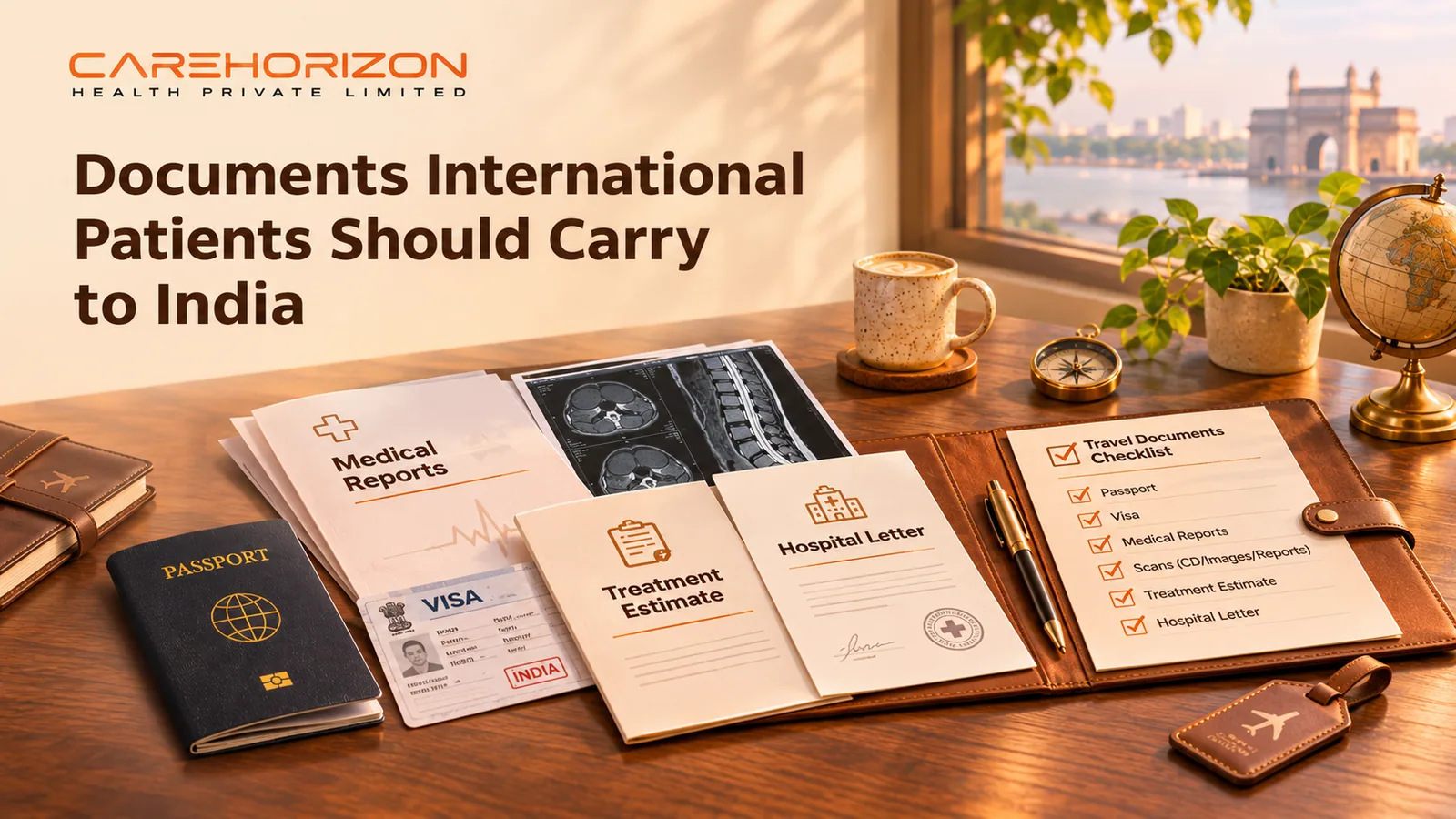
This checklist answers the question of which documents international patients India-bound should carry, with specific advice on passports, visas, hospital invitation letters, reports, imaging, prescriptions, treatment estimates, insurance, medical attendants and discharge. It also explains what should remain in hand luggage, how to protect sensitive data and why a patient should verify nationality-specific requirements rather than relying on one universal packing list.
Start With Two Separate Document Folders
Use one group for immigration and travel documents, including passports and visa approvals, and another for hospital and clinical paperwork. This prevents a patient from confusing an authentic hospital invitation with a government visa.
Keep a concise index of the contents and a reliable contact list. Store sensitive digital copies securely, with access restricted to the patient and people they authorise.
Your Original Passport
Foreign nationals generally need a valid passport or other accepted travel document with appropriate immigration permission for entry to India. Carry the original passport in cabin baggage rather than checked luggage.
For e-Visa applicants, official instructions call for at least six months' passport validity at application and two blank pages. Other visa and nationality-specific rules must be checked independently.
The Visa or Electronic Travel Authorization
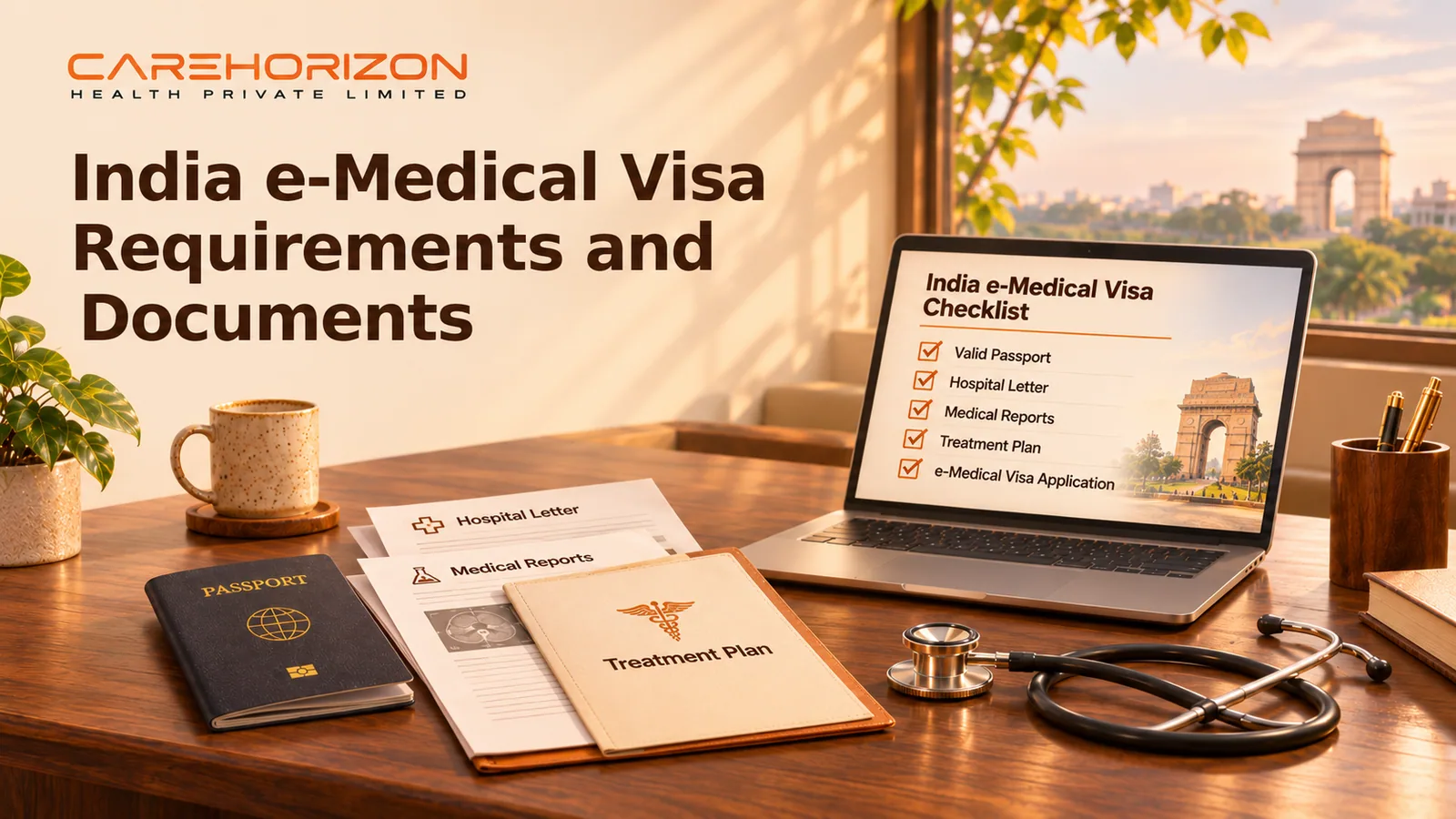
Carry proof of the immigration permission actually granted. The official e-Visa process tells approved travellers to print their Electronic Travel Authorization and present it at immigration; it also tells them to confirm the status reads GRANTED before departure.
An application confirmation, payment receipt or hospital letter is not a substitute for a granted ETA or applicable regular visa. Verify the traveller's name, passport number, visa category and entry conditions.
For related guidance, see medical visa information.
Old and New Passports
If the passport changed after a visa or ETA was issued, do not assume the old document can be discarded. India's official e-Visa guidance has specific instructions about using a new passport while carrying the old one on which the ETA was issued.
The government portal now also refers to an ETA transfer service. Check current directions for the individual case, including both documents, before travel.
The e-Arrival Card, Where Applicable
India's official visa website currently instructs relevant foreign nationals and OCI cardholders to complete an e-Arrival Card within 72 hours before arrival through approved channels.
The arrival card is separate from the visa. Complete the latest form only when required for the traveller's circumstances, and verify any additional arrival declarations shown by the current official portal.
Copies of Passport and Visa
Keep a paper copy of the identity page and visa approval in a separate location from the originals, plus an encrypted or otherwise secured digital backup.
These copies help with administration if documents are misplaced, but they do not automatically replace the originals when border officials or airlines require them.
Return or Onward Travel Documents
The official e-Visa guidance states that travellers should have a return or onward ticket and adequate funds for their stay. Keep travel booking details accessible and check what the airline requires.
An international patient's return date may be medically uncertain. Use flexible booking arrangements where practical and ask the treating clinician when return travel may be suitable.
The Hospital Invitation Letter
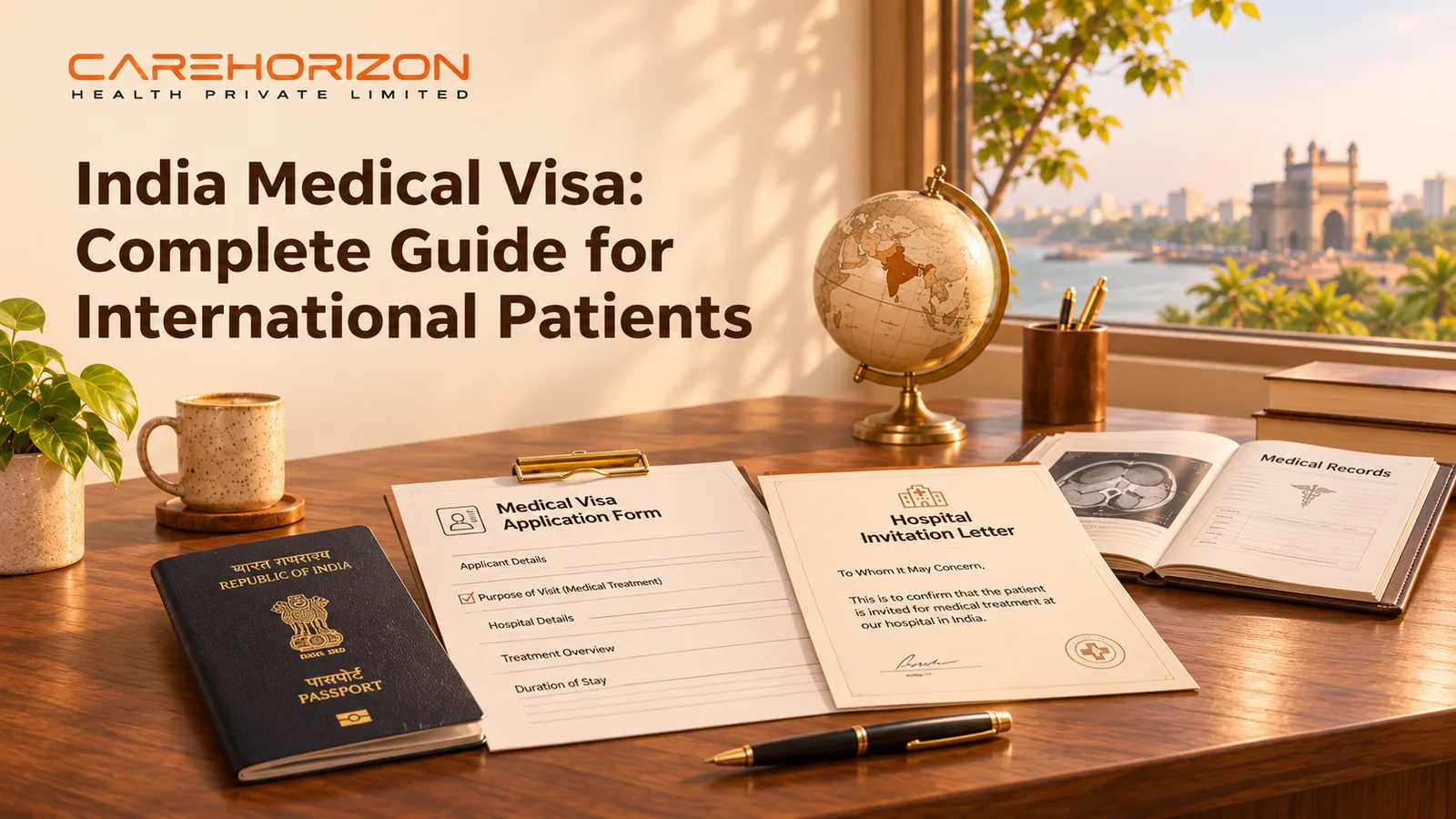
For an e-Medical application, the government requires a letter from the concerned Indian hospital on its letterhead stating a tentative admission or treatment date. The official FAQ also identifies the patient's name, nationality and passport number.
Bring the authentic final letter or a reliable copy for travel and hospital check-in. Its presence supports the medical purpose but neither grants a visa nor guarantees admission.
For related guidance, see planning treatment in India step by step.
Hospital Appointment Confirmation
Carry the appointment email or authorised confirmation specifying the specialist, date, time and exact hospital campus. A generic hospital brand name may cover more than one location.
Check whether the visit is a consultation, diagnostic review or confirmed admission. These are different stages and should not be described interchangeably.
Written Treatment Plan or Specialist Opinion
Where available, carry the qualified clinician's written opinion or provisional treatment plan. It should explain the relevant diagnosis or clinical question, proposed next step and any unresolved investigations.
An opinion based on records alone may change after examination. Do not treat it as a guarantee of surgery or replace the responsible clinician's consent discussions.
For related guidance, see getting a second medical opinion.
Referral Letter From the Current Doctor
A referral can summarise why care is being sought in India, the working diagnosis, previous treatment, relevant findings and the question for the receiving specialist.
It is useful when the patient has a long history or multiple specialists. Ask the original doctor to prepare a truthful, dated summary rather than having a travel agent interpret complex results.
For related guidance, see organising medical records for specialist review.
Current Medical Summary
Prepare a short, accurate one-page overview of major diagnoses, prior operations, significant allergies and current treatment. Identify the originating clinician and date of the summary.
This is an aid to communication, not a substitute for official discharge notes or clinical examination. Update it when medicines or conditions change.
Laboratory Reports
Bring recent and clinically relevant blood, urine, microbiology and other tests related to the proposed consultation. Include report dates, reference ranges and the laboratory's identifying information where available.
The Indian specialist may repeat tests for clinical reasons. A previously normal result is not automatically valid for every new treatment decision.
Imaging Reports and Original Image Files
Carry radiology reports as well as original imaging data where requested, such as DICOM files from CT, MRI or other studies. A screenshot or photo of a radiology report may omit information the reviewing specialist needs.
Ask the hospital whether it prefers a secure upload, disc or portable storage. Check compatibility ahead of travel and ensure the files are complete and linked to the correct patient.
For related guidance, see sending records to hospitals in India.
Pathology and Histology Records
For cancer and some other conditions, original pathology reports, laboratory details and, when clinically requested, tissue slides or blocks may be needed for further review.
Such materials should be transported only under instructions from the originating and receiving laboratories, observing applicable rules. Do not assume they can be packed as ordinary loose documents.
Previous Discharge Summaries
Include relevant discharge notes from prior hospitalisations, particularly when they explain major operations, complications, medicines or ongoing monitoring.
A discharge summary usually provides a more reliable timeline than a family member's recollection. Ensure each document belongs to the patient and the dates are legible.
Operative and Procedure Notes
If a previous procedure affects current care, obtain the operation or procedure report where available. This can clarify implanted devices, findings, anaesthesia considerations and follow-up.
The receiving clinician determines which past documents are necessary. Not every minor historic procedure requires full records.
Medication List With Generic Names
Carry a current list of medicine names, generic ingredients where known, doses, schedules and the prescribing clinician. Trade names differ across countries, and the same brand name can sometimes be confusing.
The CDC advises travellers with complex health needs to carry prescriptions and a list including generic names and doses. Keep the list updated if the treating doctor changes the regimen.
Original Prescriptions
Carry copies of prescriptions for medicines the patient travels with, preferably with physician details. Keep medicines in original labelled packaging when possible.
Medicine import rules and airline requirements vary, especially for controlled or restricted substances. Confirm current Indian customs and regulatory guidance before departure rather than assuming all prescriptions are automatically sufficient.
A Medical Letter for Complex Conditions
Patients with chronic or complicated conditions may benefit from a clinician's letter describing diagnoses, allergies, treatments, medicine doses and any necessary devices. This may help airline staff and receiving clinicians understand the patient's needs.
Such a letter is not by itself permission to carry restricted medicines or medical equipment. Obtain airline and regulatory clearance where required.
Allergy and Important Safety Information
Prepare a clearly visible allergy list, including the reaction if known, and any information the treating team has identified as critical. Where appropriate, carry contact details of the usual treating clinician.
Do not rely on a family member's memory for medication allergies or complex treatment history. The patient should review the summary before travel when able.
Vaccination and Public Health Records
Travellers arriving from or transiting through certain countries may need specific vaccination evidence under Indian entry health rules, such as yellow-fever-related requirements. These are route-specific rather than universal for all medical tourists.
Verify current Indian government and airline guidance for the traveller's origin and itinerary. Avoid adding blanket vaccine requirements not supported by the actual route.
Airline Medical Forms or MEDIF
Some patients travelling with oxygen, limited mobility, recent surgery or other clinical needs may require an airline medical information form or specific clearance. Requirements differ by carrier and patient status.
Confirm directly with the airline and treating clinician. An Indian medical visa is not proof of fitness to fly, and airport wheelchair assistance is not equivalent to clinical monitoring.
Medical Escort and Transport Documents
For a medically supported journey, carry the transport provider's confirmed arrangements, clinical referral or handover summary and appropriate contact details. The clinical team must determine required staffing and equipment.
An attendant's passport and visa do not establish professional medical competence. Transport and immigration authorisations are separate.
For related guidance, see documents for a hospital transfer.
Patient Companion and Attendant Documents
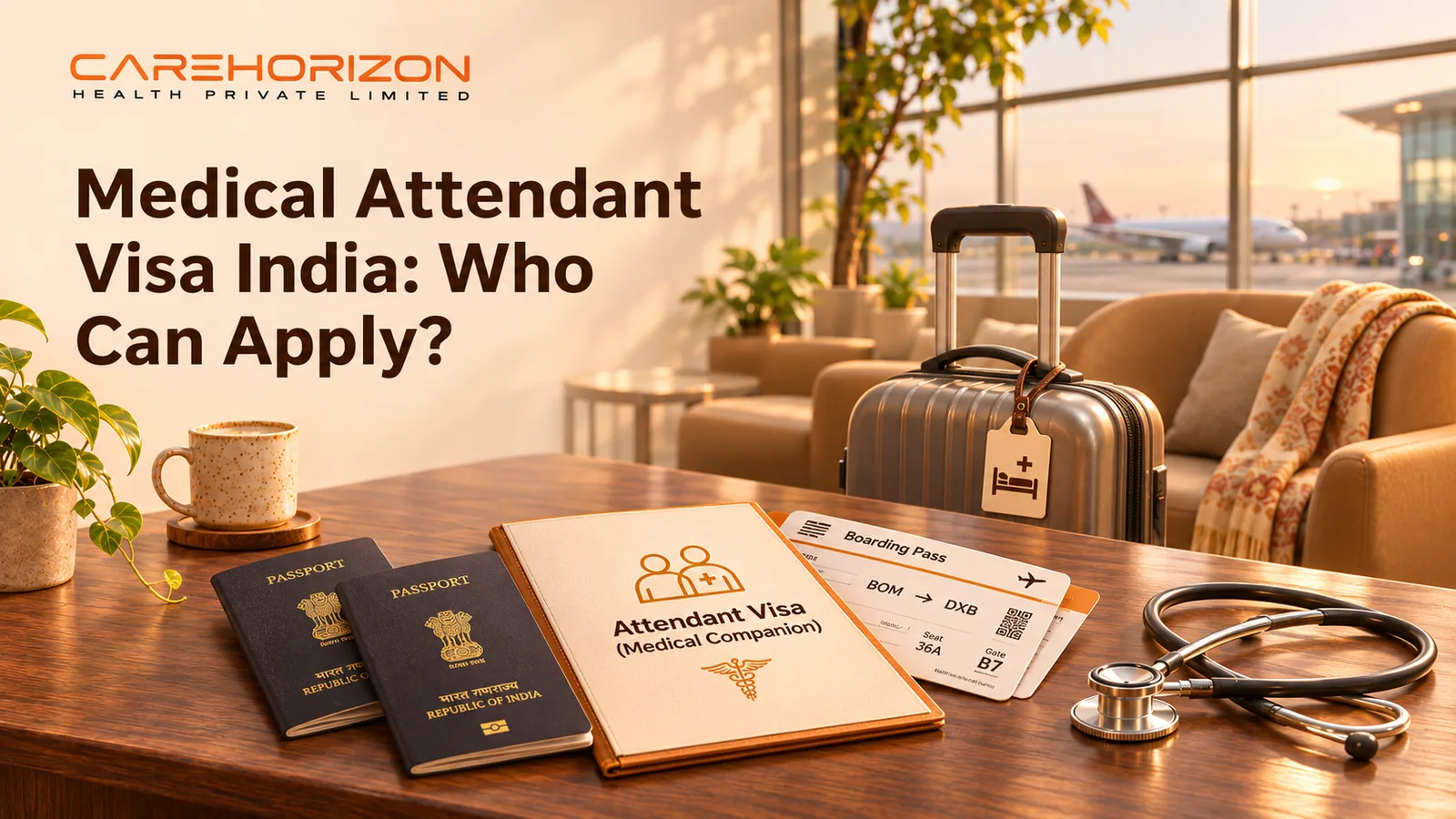
Each travelling relative or attendant should carry their own passport, applicable visa or ETA and travel confirmations. Where relevant, keep information linking the attendant's application to the patient's medical visit.
Under the e-Visa scheme, the government states a maximum of two e-Medical Attendant Visas per principal e-Medical Visa. Approval and eligibility remain individual, and regular visa routes may differ.
For related guidance, see guide for attendants.
Consent or Authorisation to Share Records
Where an accompanying relative or coordinator will receive reports or communicate with hospitals, the patient may need to provide suitable authorisation according to the hospital's process.
A family relationship does not create unlimited access to private medical information. Share only what is necessary for the agreed purpose.
Hospital Treatment Estimate
Carry a dated written estimate identifying the proposed treatment, included services, exclusions, deposit terms and assumptions. An estimate may be provisional until the doctor examines the patient.
Do not confuse the estimate with a visa-support letter or binding final invoice. Ask the billing team to explain unexpected additional items and revised treatment plans.
For related guidance, see understanding hospital treatment estimates.
Payment Receipts and Deposits
Keep receipts for hospital deposits and prepayments, ideally with the exact hospital entity and transaction reference. A printed or securely saved digital copy can help resolve billing questions.
Before paying, verify the beneficiary through official hospital channels. Avoid sending funds to an unrelated personal account on the basis of a forwarded message.
Insurance Policy and Preauthorisation
Bring the insurer's policy details, identification card, preauthorisation letter if issued and emergency contact information. A claim or cashless arrangement depends on the actual policy and hospital.
The CDC advises travellers to carry insurance records and retain medical bills. Do not assume a travel insurance policy covers planned treatment or that an insurer has accepted every procedure.
For related guidance, see managing money and payments during treatment.
Currency and Financial Planning Records
Maintain a record of expected medical charges, travel expenses, accommodation costs and lawful payment arrangements. Overseas payment and foreign-exchange rules may affect the patient.
Avoid carrying unnecessary cash or sensitive financial credentials. Confirm permitted payment methods and applicable declaration requirements through official sources.
Accommodation and Local Transport Confirmations
Carry the hotel or serviced-apartment address, check-in details, verified pickup contact and the exact hospital campus address. Some patients need step-free access or proximity to follow-up appointments.
Travel time and suitable transport depend on condition and route. Do not rely on an estimated transfer duration without checking the actual destination.
For related guidance, see where to stay near the hospital.
Emergency Contacts in Two Countries
Create a small contact sheet with the receiving hospital, current treating physician, local transport provider, emergency contacts, insurer and family contact at home.
Save it offline as well as in print. If a phone is lost or has no network access, the patient or attendant should still be able to reach the relevant people.
Translation and Language Documents
If important reports are in a language the receiving clinician cannot read, ask whether certified or professional translations are needed. Keep the original medical documents alongside translated copies.
Do not rely on an unverified machine translation for medicine doses, diagnosis or consent. Clinical interpretation should be handled by appropriate professionals.
Paper Versus Digital Copies
Carry originals where legally required and use digital backups for records that hospitals may accept electronically. Store the digital folder securely and organise filenames with dates and report types.
Some imaging files are too large for ordinary messaging applications. Confirm the hospital's approved secure transfer method before arrival.
How to Name and Order Medical Files
Use descriptive filenames such as patient identifier, report type and date, without exposing sensitive information in a public link. Put the newest relevant clinical summary first.
A simple contents page helps clinicians locate key records. Do not erase older results that explain a previous treatment decision.
What Belongs in Hand Luggage?
Keep passports, visa or ETA confirmations, the hospital letter, appointment information, current medication list, essential original prescriptions and necessary medicines readily accessible.
Do not put required travel identity documents into checked baggage. Follow airline requirements for liquids, devices, batteries and prescription medicines.
What Can Remain in Secure Digital Storage?
Large imaging studies, extensive historical reports and duplicate copies can often be held in an organised secure digital folder if the receiving hospital accepts that format.
Still carry or arrange access to originals when specifically required, such as pathology material. Assume phone coverage or internet access may be interrupted during travel.
Before Leaving the Airport
Confirm the correct arrival documentation and verify the identity of any pickup person. Have the hospital address and emergency contact available independently of an intermediary.
An airport transfer arrangement does not establish admission. The hospital may still need original documents and clinical assessment.
Documents for the First Hospital Registration
The hospital may ask for passport and visa information, contact details, appointment confirmation, referral records, consent forms and payment or insurance information. Actual intake requirements differ.
Call the relevant hospital department in advance for its document list. Avoid assuming the visa application upload checklist is identical to the hospital's registration requirements.
For related guidance, see arriving in India for treatment.
When the Treatment Plan Changes in India
New clinical findings may require further tests or a different procedure. Ask for updated written clinical recommendations, hospital estimates and appointment details.
Where visas or invitations identify a particular hospital, seek official immigration guidance before changing the institution if permission could be affected.
Collect Documents Before Hospital Discharge
Request a discharge summary, final diagnosis, procedure notes when relevant, key test results, medication schedule, follow-up plan and contact information for urgent problems.
The CDC recommends obtaining complete medical records before leaving the overseas healthcare provider so care can continue after returning home.
For related guidance, see after-discharge recovery and follow-up.
Bills and Receipts Needed After Treatment
Keep itemised bills, receipts, any payment adjustment statements and insurer correspondence. These may be needed for reimbursement or personal records.
Separate hospital treatment charges from travel coordinator, hotel and transport charges. The existence of a receipt is not a guarantee that an insurer will reimburse it.
Return-Home Medication and Follow-Up Information
Before returning, clarify medicines to continue, when to seek reviews, any restrictions on travel and whom to contact if symptoms arise. The receiving doctor at home should have the relevant reports.
A hospital discharge date is not automatic clearance for an international flight. Patients should follow individual clinical advice and airline requirements.
For related guidance, see continuing care with your doctor at home.
A One-Page Patient Document Index
The index can list passport, visa, hospital letter, appointment confirmation, specialist opinion, current summary, imaging, prescriptions, estimate, insurance and contact sheet.
Mark which are original documents, paper copies and secured digital files. The index itself does not need to disclose the full diagnosis or passport number.
Three Pouches for Easier Travel
One small pouch can hold immigration originals, another can hold the latest clinical papers and a third can hold financial and hospital administration documents. Secure digital copies provide a backup.
The arrangement is a practical suggestion, not a government requirement. It helps prevent documents from being lost among ordinary travel belongings.
Scenario: Patient Coming for a Second Opinion
A patient brings a passport and approved visa, hospital appointment, referral letter, relevant imaging and medication list. No surgery is promised before the specialist reviews the records.
The example shows how a concise clinical folder can support a consultation while keeping the visa and treatment decision separate.
Scenario: Patient Planning Surgery
A patient travels with the hospital invitation, tentative treatment plan, written estimate, previous discharge records, current medicines and insurance information.
The hospital can still change its medical recommendation after examination. The estimate and invitation should not be treated as a guarantee of the final operation.
Scenario: Patient Travelling With a Family Attendant
A patient and adult child each carry their own passport and immigration permission. The child has a contact sheet and patient-authorised access to necessary records.
The child can help organise logistics but does not automatically have access to all confidential information or the authority to make clinical decisions for the patient.
How Carehorizon Health Coordinates the Paperwork
Carehorizon Health Private Limited coordinates practical arrangements around clinical care. Depending on the enquiry, this may include organising clinical records, requesting hospital documentation and aligning appointments, transport and accommodation.
Doctors and hospitals decide treatment and admission; government agencies decide visa permission; airlines decide carriage; insurers decide coverage. Carehorizon does not issue visas, forge hospital letters, provide medical clearance or guarantee outcomes.
For related guidance, see how Carehorizon works.
Quick Pre-Departure Document Checklist
Immigration originals: valid passport, appropriate issued visa or granted ETA and any nationality- or route-specific arrival records.
Hospital documents: genuine hospital invitation, appointment details, clinician-authored opinion or provisional treatment plan, and relevant referral notes.
Medical records: current medication and allergy list, prescriptions, recent reports, imaging files and relevant prior discharge documents.
Financial and practical: treatment estimate, receipts, insurer details, hospital address, accommodation confirmation and emergency contacts.
Patient companion: each attendant's own passport and immigration permission, with any hospital-required authorisation for medical communication.
Return-home plan: reserve space for the discharge summary, final prescriptions, important investigation results, follow-up instructions and itemised bills.
Frequently Asked Questions
What documents should an international patient carry to India?
Carry the applicable original passport, approved visa or ETA, relevant arrival documents, authentic hospital correspondence, clinical reports, medication and prescription information, appointment confirmations and financial or insurance records.
Is a hospital letter a substitute for an Indian medical visa?
No. A hospital letter supports the application, while the government determines immigration permission.
Should I print my e-Visa approval?
The official e-Visa instructions tell travellers to print the ETA and confirm it shows GRANTED before travelling.
Do I need to bring original scans and pathology material?
Ask the receiving specialist. Some doctors need original imaging files or specific pathology material, while others can begin with reports.
Do I need to carry all my old medical reports?
Bring records relevant to the current condition and significant treatment history, organised by date. The receiving hospital can advise whether older documents are necessary.
Can I carry prescription medicines into India?
Requirements depend on the substance, quantity and applicable Indian import rules. Bring authentic prescriptions and original packaging, and verify restrictions before travel.
What should a family attendant carry?
The attendant needs their own passport and visa or ETA, travel confirmations and any patient-authorised documents needed for practical hospital coordination.
Does the treatment estimate guarantee the final bill?
No. An estimate can change if investigations or treatment change. Request clear inclusions, exclusions and updated billing information.
What records should I collect before leaving India?
Ask for discharge summaries, procedure information when relevant, test results, prescriptions, follow-up instructions, hospital contacts and itemised bills.
Can Carehorizon guarantee that these documents will secure entry or treatment?
No. Immigration authorities decide entry and hospitals and clinicians decide treatment. Carehorizon may assist with practical document coordination.
Official and Clinical References
- Indian Visa Online — Official Visa and Arrival Requirements: https://indianvisaonline.gov.in/
- Government of India — e-Visa Instructions, Approved ETA and Passport Requirements: https://indianvisaonline.gov.in/evisa/
- Government of India — e-Visa FAQ, Required Hospital Letter: https://indianvisaonline.gov.in/evisa/tvoa.html
- CDC Yellow Book — Medical Tourism: Medical Records and Follow-Up: https://www.cdc.gov/yellow-book/hcp/health-care-abroad/medical-tourism.html
- CDC Travelers' Health — Medical Tourism and Medicines: https://wwwnc.cdc.gov/travel/page/medical-tourism
- CDC Yellow Book — Travellers with Chronic Illnesses: https://www.cdc.gov/yellow-book/hcp/travelers-with-additional-considerations/travelers-with-chronic-illnesses.html
- CDC Yellow Book — Travel Health Insurance Documentation: https://www.cdc.gov/yellow-book/hcp/health-care-abroad/travel-insurance.html
For planned international patient coordination: Carehorizon Health | WhatsApp/Call +91 6292041222 | care@carehorizonhealth.com | https://carehorizonhealth.com/enquiry/
Medical, immigration, financial and publication disclaimer: This is general document-preparation guidance reviewed on 12 November 2026, not legal advice, clinical advice, immigration clearance, a guarantee of admission, a customs exemption, medical fitness certification or insurance approval. Requirements differ by nationality, visa type, airline, medication and hospital. Verify live Indian government and operator rules for each journey. Doctors and hospitals determine care, authorities decide entry and regulated medicines, and carriers decide medical acceptance. Carehorizon coordinates practical arrangements around clinical care. Internal website links come from the supplied inventory and require live-page verification before publication.
Carehorizon Health coordinates medical travel, patient transfers and related arrangements. The information here is educational; it does not diagnose, prescribe, guarantee an outcome or replace advice from your treating medical team. Service availability, costs and travel requirements are confirmed case by case.